

By: S.M.A Kazmi
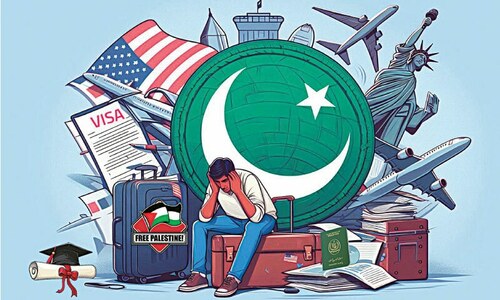
For years, the United States has symbolized opportunity, knowledge, and a better future — especially for students from countries like Pakistan, where many view higher education abroad as a pathway to prosperity and global exposure. But for countless Pakistani students today, the very dream they’ve worked tirelessly to pursue is now tangled in bureaucracy, fear, and a growing sense of disillusionment.
Over the past few years — and most drastically under the Trump administration’s return to office — visa restrictions, increased surveillance, and funding cuts to universities have made the U.S. seem less like a welcoming land of promise and more like a fortress under siege. The consequences have been deeply personal.
Imagine a family that has built their entire life around a PhD student’s academic career in the U.S. Now, despite having spent years there, they’re fearful of boarding a plane to visit their family in Pakistan, worried that re-entry into the U.S. may not be possible. Their young child, too small to understand politics, simply wants to visit her grandmother. But that innocent wish is now impossible to fulfill.
This is not an isolated case. More and more students — even those already enrolled in American institutions — are opting to stay put, indefinitely postponing visits home or trips abroad for fear of being barred from returning. The travel bans, increased airport scrutiny (especially for visibly Muslim individuals), and rumors of visa revocations are fueling anxiety among young people who once considered the U.S. a beacon of academic excellence.
The emotional toll is hard to quantify but easy to observe. College counselors in Pakistan are fielding panicked calls from students and their parents. Some students, rejected for unclear reasons, spiral into depression. A few have even questioned whether life is worth continuing without this dream — a chilling reminder of the weight that international education carries in the minds of many Pakistani families.
The process itself has become grueling. Thousands of dollars go into applications, language tests, visa interviews, and standardized exams. For medical students, costs climb even higher, with USMLE exam fees, elective placements, and housing expenses. And now, there’s no guarantee of return on that investment.
What was once a straightforward pathway — take your SATs, get admitted, apply for a visa, pack your bags — is now riddled with obstacles. Visa officers reject applications for vague reasons like “insufficient home ties,” and the introduction of “social media vetting” adds another layer of fear and ambiguity. Even students with perfect academic records, financial backing, and clear plans to return home are being denied.
The Trump administration’s rhetoric around foreign students has been deeply unsettling. Sweeping accusations of universities failing to combat “anti-Semitism” during pro-Palestinian protests have resulted in crackdowns that disproportionately target Muslim students, particularly from South Asia and the Middle East. Islamophobia is no longer an undercurrent — it’s a visible, structural barrier that’s reshaping international student life.
Meanwhile, funding cuts have started to choke the very institutions that once thrived on global talent. With billions in federal aid to top universities frozen or under threat, opportunities for scholarships and research positions are dwindling. For Pakistani students who rely on financial assistance, that often means the dream ends before it begins.
Unsurprisingly, many students are now reconsidering their options. Some are shifting focus to Europe, Turkey, or the Middle East — regions offering comparable education at a more affordable price, with fewer immigration hurdles and a more welcoming environment. Even domestic universities in Pakistan have seen a spike in applications as families begin to rethink the feasibility of sending their children to the U.S.
And yet, the heartbreak lingers. For medical students who’ve cleared multiple USMLE exams and meticulously planned their electives, delays or denials can derail years of preparation. For those entering data science or business programs, the shifting immigration rules cast a shadow over post-graduation job prospects. Even students who get their visas are now advised by university counselors not to travel — a far cry from the mobility and freedom once associated with American education.
This isn’t just about paperwork. It’s about a fundamental shift in perception. The U.S., once considered the ultimate destination for academic growth and opportunity, is fast losing its appeal. Rising Islamophobia, political unpredictability, and administrative hostility have exposed cracks in the idealized vision of the American Dream.
What was once a dream of opportunity is beginning to feel like a high-stakes gamble. For many Pakistani students, the cost — financial, emotional, psychological — may soon outweigh the reward.