The United States and China have agreed on a framework aimed at reviving stalled trade talks and easing tensions over critical export controls, including China’s restrictions on rare earth minerals.
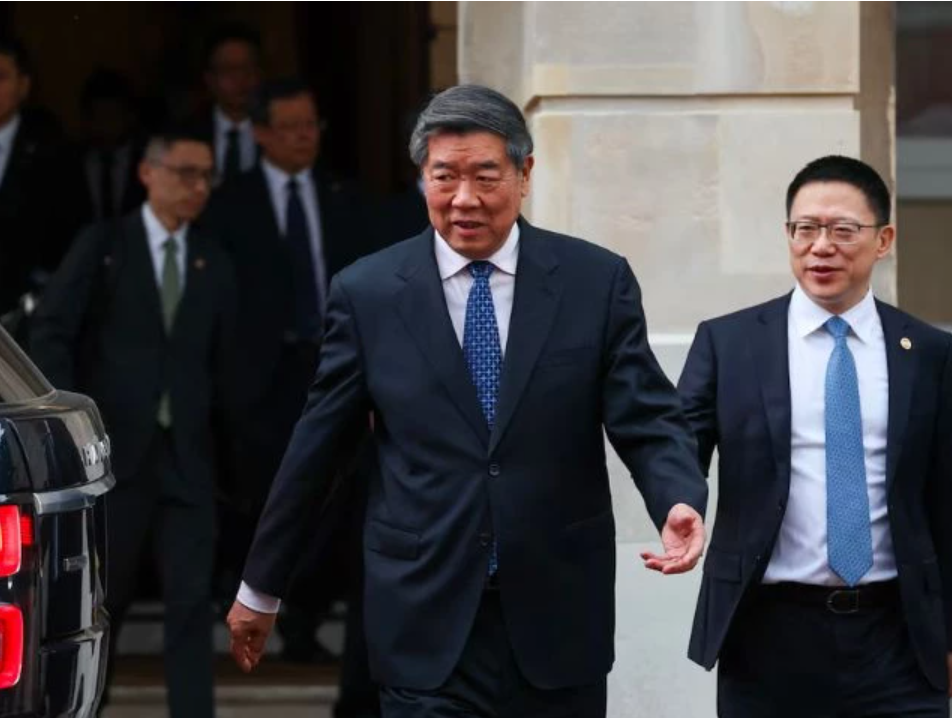
After two days of intense negotiations in London, US Commerce Secretary Howard Lutnick announced that both sides had reached a provisional deal to implement the consensus forged last month in Geneva. The agreement aims to roll back retaliatory tariffs and remove curbs on rare earth exports, though few details were immediately released.
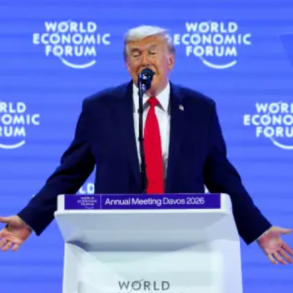
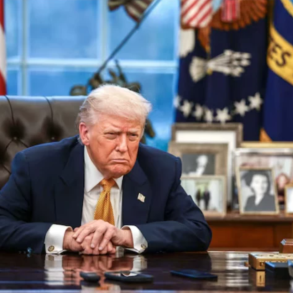
“This framework puts meat on the bones of the Geneva agreement,” Lutnick said, noting that both parties would now consult with their respective leaders—President Donald Trump and President Xi Jinping—for formal approval before implementation.
China’s Vice Commerce Minister Li Chenggang echoed this sentiment, confirming a framework had been reached in principle and would be submitted to both presidents for final endorsement.
The Geneva accord had initially sought to de-escalate tariff conflicts, but progress was undermined by China’s continued restrictions on exports of key minerals. In retaliation, the US imposed new controls on semiconductor design software, aviation components, and other sensitive goods destined for China.
While the latest agreement may stabilize the situation in the short term, it offers limited assurance of resolving longstanding trade disputes. These include US objections to China’s state-backed economic practices and Trump’s broader tariff strategy, which has disrupted global markets and cost businesses billions.
Josh Lipsky of the Atlantic Council’s GeoEconomics Center said, “They’re back to square one—but that’s better than square zero,” pointing out the lack of clarity in the Geneva terms and the need for specific follow-up actions.
The two countries now face an August 10 deadline to finalize a comprehensive trade agreement. If no deal is reached, tariff levels could snap back to pre-Geneva highs—reaching up to 145% on US goods and 125% on Chinese imports.
Investor reactions were measured. MSCI’s index of Asia-Pacific shares (excluding Japan) rose 0.57%, with analysts noting the cautious optimism reflected in markets. “The devil will be in the details,” said Chris Weston, head of research at Pepperstone, “especially regarding rare earth volumes and the scope of relaxed chip export restrictions.”
Lutnick stressed that China’s export restrictions on rare earth minerals—vital for electric vehicle motors and other high-tech applications—would be resolved as a core element of the framework. “You should expect the US measures introduced in response to those restrictions to be lifted in a balanced way,” he said.
The easing of rare earth restrictions follows a significant drop in China’s exports to the US, which fell 34.5% in May—the steepest decline since the COVID-19 pandemic. Meanwhile, the World Bank revised its global growth forecast for 2025 down to 2.3%, citing tariff-related uncertainty as a key economic risk.
The breakthrough in talks was reportedly catalyzed by a rare direct phone call between Presidents Trump and Xi last week, which helped guide negotiators to align the Geneva consensus with evolving political priorities.
US Trade Representative Jamieson Greer and Treasury Secretary Scott Bessent joined Lutnick for the London talks, though Bessent left early to testify before Congress.
The discussions come amid rising global concern over supply chain disruptions. China’s near-monopoly on rare earth magnets and its decision in April to suspend exports of various critical minerals rattled manufacturers worldwide. In response, the US revoked several export licenses and expanded national security restrictions on key technology shipments.
As the two sides prepare for further talks, global stakeholders—including the EU, Canada, Japan, and aerospace industry leaders—have urged the US to refrain from imposing additional security-based tariffs on commercial aircraft and components.
Shortly after the framework announcement, a US appeals court ruled to maintain Trump’s existing tariffs while a legal challenge over their scope is under review.
While the agreement marks a tentative step forward, both sides face significant hurdles in negotiating a lasting resolution to their deeply entrenched economic differences.