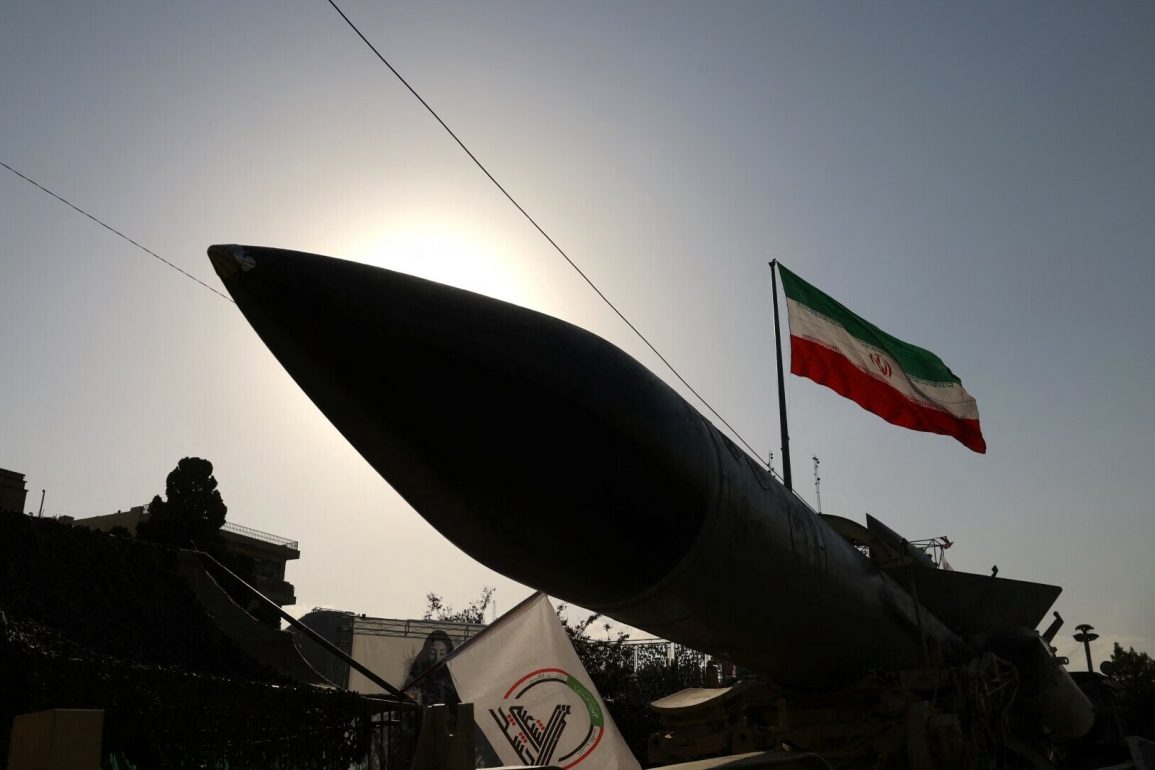

The military confrontation between Iran and Israel has intensified dramatically following a series of high-profile attacks, with both nations demonstrating their strategic capabilities—and limitations. The latest Israeli airstrikes on Iran’s military and nuclear infrastructure, reported to have taken place in June 2025, mark a significant escalation in an already volatile regional rivalry.
Experts believe that Iran is likely to move its remaining nuclear-related assets underground in response to Israel’s recent assault, a strategic recalibration in light of increasing vulnerability. This follows a pattern of tit-for-tat hostilities: in April 2024, a suspected Israeli airstrike on Iran’s embassy compound in Damascus killed seven IRGC officers. In October the same year, Iran retaliated with missile attacks targeting Israel, which prompted Israeli airstrikes that claimed four Iranian servicemen.
Air Defence Systems
Israel’s Iron Dome remains a central pillar of its defence infrastructure, designed to selectively intercept threatening projectiles. Iran, meanwhile, deployed its Azarakhsh system in early 2024, which combines radar and electro-optic technologies for short-range interception. However, Israeli strikes in recent months have damaged key Iranian defence installations, including S-300 systems.
Troop Numbers and Military Manpower
According to Al Jazeera, Iran commands 610,000 active personnel, supplemented by a 350,000-strong reserve force. This includes 190,000 members of the elite IRGC. In contrast, Israel maintains a smaller standing force of 169,500 but has a larger reserve army at 465,000.
Defence Expenditure
Military spending paints a stark picture of the two countries’ strategic priorities. Iran’s defence budget dropped to $7.9 billion in 2024 due to international sanctions. Conversely, Israel significantly ramped up its expenditure to $46.5 billion—a 65% increase—largely attributed to its operations in Gaza.
Air Force Capabilities
Israel maintains a modern air fleet with 345 combat aircraft and 43 attack helicopters. Iran’s air power, though numerically comparable with 312 aircraft and various helicopters, suffers from significant age and obsolescence. Most of Iran’s fleet, including the MiG-29s and F-14A Tomcats, are decades old and lack meaningful upgrades, making them highly vulnerable to Israeli air superiority.
Ground Forces and Equipment
Iran has a substantial advantage in ground forces, fielding over 10,000 tanks, nearly 7,000 artillery guns, and hundreds of armoured personnel carriers. In contrast, Israel operates a leaner ground force with about 400 tanks and 530 artillery pieces, though its mobility and battlefield coordination are considered technologically superior.
Naval Power
Israel’s navy includes five submarines and 49 patrol vessels. Iran’s naval strength is more expansive, featuring 17 submarines, seven corvettes, and numerous patrol boats and landing craft. While Iran’s navy boasts numerical superiority, Israel’s focus is on high-tech maritime defence and strategic deterrence.
Ballistic Missile Arsenal
Iran possesses an array of at least 12 missile types, including the Khorramshahr and Sejjil, with ranges up to 2,000 km. Israel’s missile arsenal includes the LORA and the Jericho-3, the latter capable of reaching between 4,800 to 6,500 km—providing Israel with longer-range strategic reach.
Nuclear Capabilities
Israel is widely believed to possess around 90 nuclear warheads, although it maintains a policy of deliberate ambiguity. Iran, on the other hand, does not currently possess nuclear weapons but continues to pursue nuclear activities that remain a flashpoint of international concern. Despite five rounds of negotiations with the U.S. in 2024, Supreme Leader Ayatollah Ali Khamenei recently reaffirmed Iran’s refusal to halt uranium enrichment.
Conclusion
In military terms, Israel holds a qualitative edge in air power, technology, and nuclear capability, while Iran maintains superiority in troop numbers and ground equipment. However, strategic effectiveness goes beyond numbers—Israel’s ability to strike with precision and relatively little resistance in recent confrontations reflects both its technological advantage and Iran’s aging military infrastructure.
Yet, as tensions escalate, both nations face the risks of miscalculation, with regional and global implications. The current military balance suggests that while Israel can inflict considerable damage, Iran’s depth and resilience—bolstered by its missile program and asymmetric tactics—make it a formidable adversary.