US President Donald Trump has announced plans for talks with Iran next week, expressing optimism about reaching an agreement to curb Tehran’s nuclear ambitions following what he described as a US-led “victory” in ending the war between Iran and Israel.
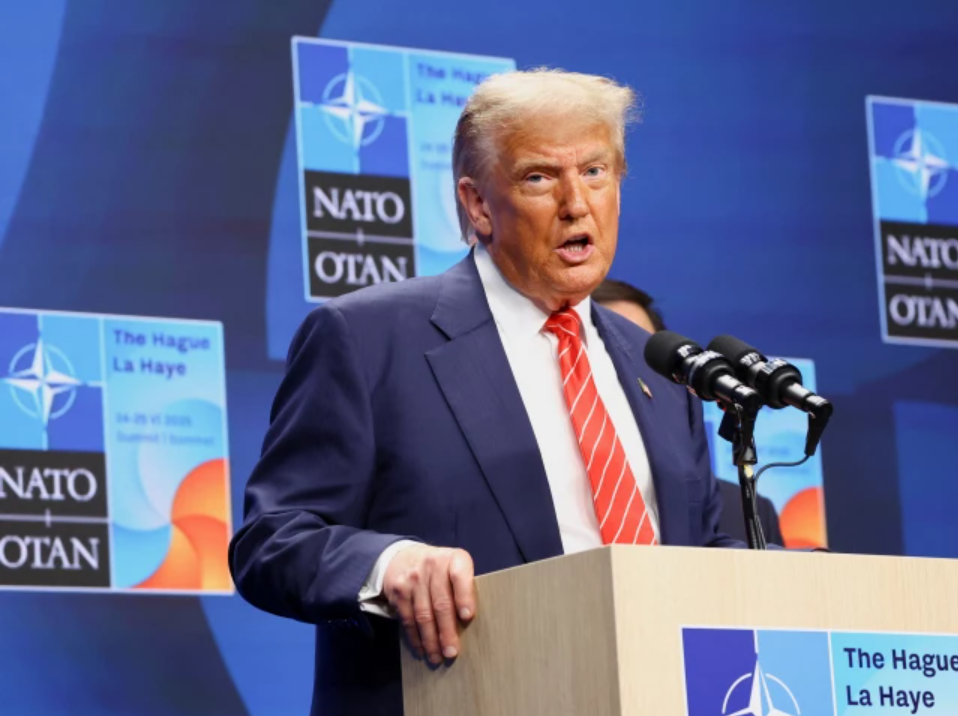
Speaking at a NATO summit in The Hague on Wednesday, Trump credited US military strikes on Iranian nuclear sites — including the use of powerful bunker-buster bombs — for bringing the 12-day conflict to a close. “It was very severe. It was obliteration,” Trump said, downplaying initial assessments from the US Defense Intelligence Agency, which suggested the strikes may have delayed Iran’s nuclear capabilities by only a few months.
“We’re going to talk to them next week. Maybe we’ll sign an agreement — maybe not. Frankly, I don’t think it’s that necessary,” Trump said. He expressed confidence that Tehran would focus on recovery rather than rebuilding its nuclear program, adding, “The last thing they want to do is enrich anything right now.”
Israel’s nuclear agency claimed the strikes had set back Iran’s nuclear development by years. The White House circulated this assessment, though Trump noted he was not relying solely on Israeli intelligence.
Trump warned that while both sides were exhausted, renewed conflict remained a possibility if Iran attempted to restart its nuclear program. “We won’t let that happen — militarily we won’t,” he said. Still, he voiced hope for improved relations: “I think we’ll end up having something of a relationship with Iran.”
UN nuclear watchdog chief Rafael Grossi urged a longer-term solution beyond military strikes, emphasizing the need for inspectors to return to Iranian sites to assess the true state of its nuclear program. “The technological knowledge and industrial capacity are there. That no one can deny,” Grossi said.
The conflict, which began with Israel’s surprise strikes on June 13, decimated Iran’s top military leadership and killed leading nuclear scientists. Iran’s missile counterattacks caused significant damage in Israel, penetrating its defenses on an unprecedented scale. Official figures put the death toll at 627 in Iran and 28 in Israel.
Both nations claimed success: Israel said it destroyed Iran’s nuclear and missile sites, while Iran said it forced Israel into a ceasefire. Meanwhile, Iranian President Masoud Pezeshkian suggested the crisis could spur domestic reforms, calling it “an opportunity to create unity” between officials and citizens. However, authorities signaled their intent to maintain control, executing three men accused of aiding Israel’s Mossad and arresting 700 others linked to Israel during the war.
While Trump previously hinted at regime change in Iran, he later said he opposed it, warning that it could destabilize the region. His focus, he said, was on calming tensions.
Across both nations, relief over the ceasefire was tempered by unease. In Tehran, residents like 67-year-old Farah voiced concern about future crackdowns, while in Tel Aviv, people welcomed a return to normalcy but remained weary from the conflict’s toll.