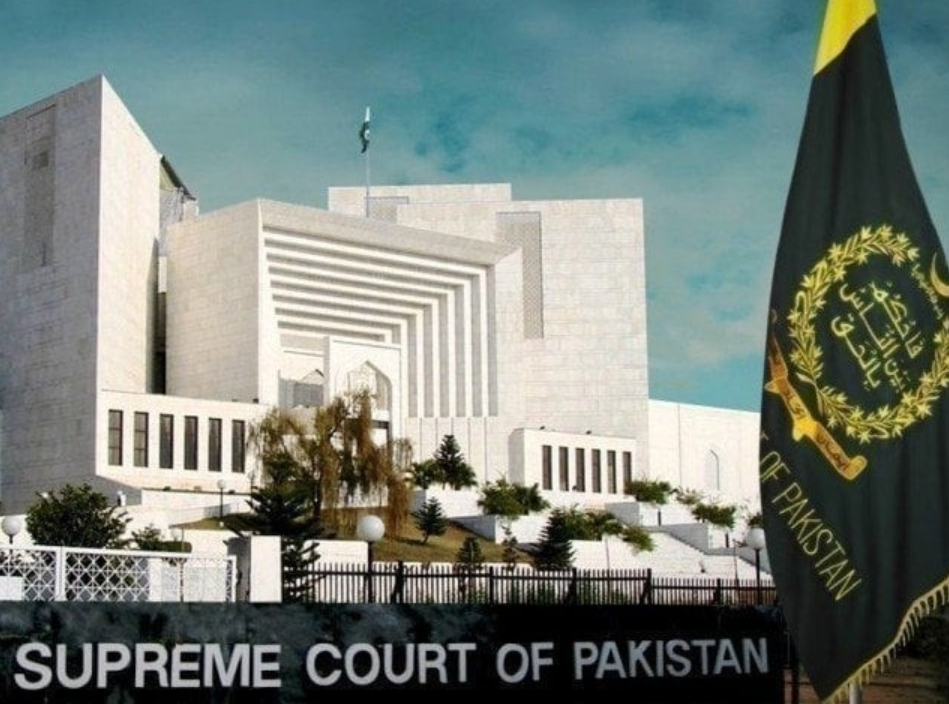

In a landmark judgment with wide-reaching implications for marriage documentation in Pakistan, the Supreme Court has strongly urged both federal and provincial governments to review and reform the Nikahnama — the official marriage contract form — citing its ambiguous language and inadequate safeguards for women’s rights.
Led by Justice Syed Mansoor Ali Shah, a three-member bench emphasized that without revising the Nikahnama in its entirety, even commendable legislative efforts such as those introduced in Punjab may fall short of ensuring meaningful protection for women. The ruling was delivered in a detailed 22-page verdict authored by Justice Athar Minallah during a family law case.
The court found that the current form, established under the 1961 Muslim Family Laws Ordinance and corresponding Rules, uses unclear and potentially misleading terminology. These ambiguities, the judgment said, not only confuse ordinary users but also open the door to misinterpretation and legal disputes — an outcome that contradicts the form’s intended purpose.
The justices recommended a comprehensive redesign of the document to make it more “user-friendly,” especially for those with limited education or legal literacy. Clearer headings, simpler language, and explicit instructions would help ensure that individuals — particularly brides — can make informed decisions and assert their rights without undue influence.
Beyond form revisions, the court underlined the critical role of Nikah registrars in safeguarding marital rights. In Punjab, for example, the 2015 amendment to the law legally obligates registrars to accurately fill out each column based on the direct input of both the bride and groom. Failure to do so can lead to jail time and fines — a strong deterrent aimed at preventing negligence or malpractice.
However, the court made clear that effective implementation depends on the competence and integrity of the individuals performing these duties. It called for stricter licensing criteria, training programs, and periodic audits by Union Councils to ensure only qualified individuals are permitted to act as registrars. The judgment also advised governments to actively guide councils in setting such standards and to ensure registrars are not influenced by prevailing social or cultural pressures.
The ruling is particularly noteworthy in a country where women often face cultural and systemic challenges in asserting their marital rights. Justice Minallah acknowledged the importance of Punjab’s legislative amendments but cautioned that piecemeal reforms without structural changes to the Nikahnama itself may be insufficient.
Finally, the Supreme Court directed that copies of the judgment be circulated to key government offices, encouraging them to initiate legislative and administrative action based on the court’s observations.
Bottom line: This decision represents a significant step toward making marriage contracts more transparent, enforceable, and just — particularly for women. But the true impact will depend on whether lawmakers and administrators follow through with tangible, systemic reforms.