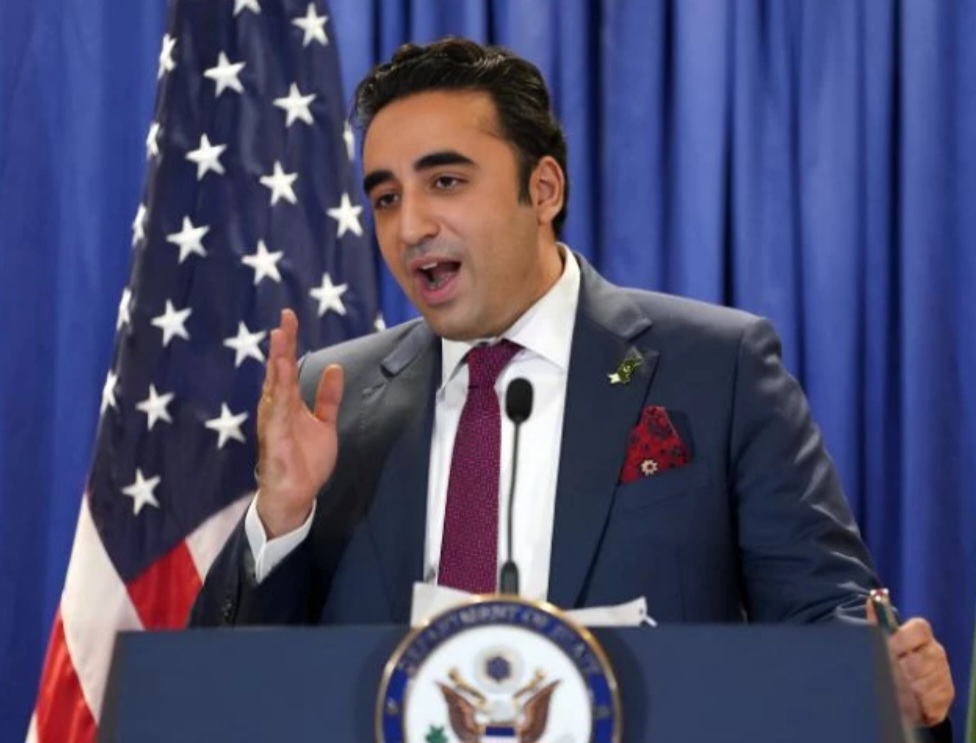
A high-level parliamentary delegation from Pakistan, led by Pakistan Peoples Party (PPP) Chairman and former Foreign Minister Bilawal Bhutto Zardari, held a series of crucial meetings with US lawmakers on Capitol Hill, highlighting escalating tensions in South Asia and urging international attention to prevent further deterioration.The Pakistani delegation, comprising prominent political figures and former diplomats—including Musadik Masood Malik, Senator Sherry Rehman, Hina Rabbani Khar, Senator Bushra Anjum Butt, Senator Faisal Sabzwari, Khurram Dastagir Khan, Ambassador (r) Jalil Abbas Jilani, and former Foreign Secretary Tehmina Janjua—engaged with a bipartisan group of members of the US Congress, including the Congressional Pakistan Caucus co-chaired by Rep. Jack Bergman and Rep. Tom Suozzi.In their meetings, Chairman Bhutto Zardari warned that South Asia is on the edge of crisis, citing recent Indian actions such as the alleged targeting of civilians and the unilateral suspension of the Indus Waters Treaty—moves he described as violations of international law. He underscored that peace in the region is only possible through dialogue, mutual restraint, and a fair resolution to the Jammu and Kashmir issue.Bilawal expressed gratitude to the United States for its diplomatic intervention, particularly lauding former President Donald Trump’s role in helping mediate a ceasefire following recent hostilities.The delegation also met with several influential US lawmakers, including Senator Van Hollen, Senator Cory Booker, Senator Jim Banks, Senator Elissa Slotkin, Congresswoman Sydney Kamlager-Dove, Congressman Tom Kean Jr., and Congressman John Moolenaar. In these discussions, they emphasized Pakistan’s commitment to peace, responsible diplomacy, and a principled approach to counterterrorism.They urged respect for international commitments, including UN Security Council resolutions and the Indus Waters Treaty—calling it a “lifeline” for millions of Pakistanis, now threatened by what they described as India’s weaponization of water.The meetings followed a surge in tensions after a deadly April 22 attack in the Pahalgam area of Indian-administered Kashmir. India blamed Pakistan-based groups for the incident, while Pakistan strongly rejected the claims and called for an independent investigation.India subsequently escalated the situation with retaliatory measures, including closing the Wagah border, revoking all Pakistani visas, and suspending the decades-old Indus Waters Treaty. Pakistan condemned the move as “an act of war” and sealed its side of the border in response.Violence peaked with Indian airstrikes on Pakistani cities on May 6–7, prompting Islamabad to launch “Operation Bunyan-un-Marsoos” in retaliation. The conflict was halted after the United States brokered a ceasefire, but key disputes, especially over water rights and Kashmir, remain unresolved and continue to strain bilateral ties.Bilawal also called for increased regional trade, framing it as a vital tool for economic development and peaceful engagement.US lawmakers welcomed the delegation and reiterated American support for Pakistan’s development and stability, encouraging both countries to exercise restraint and work toward lasting peace in the region.