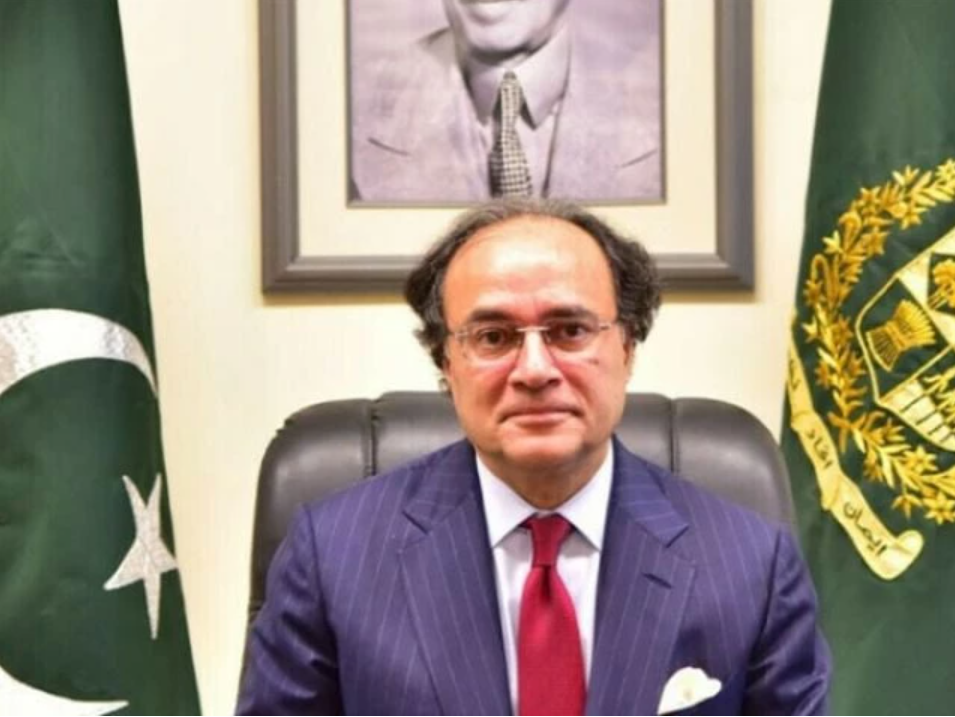

Aurangzeb Stresses Tech-Driven Financial Inclusion
ISLAMABAD —
Federal Finance Minister Muhammad Aurangzeb chaired a key meeting on Tuesday at the Finance Division to discuss advancing Pakistan’s move toward a digital and less cash-reliant economy.
Senior leaders from the financial sector, including commercial banks, development finance institutions, regulators and investment experts, participated in the session. They are part of a committee formed by the minister to draft proposals that will facilitate Pakistan’s transition to a digital economy.
The discussions covered a range of initiatives to boost the adoption of digital payments. Participants reached consensus on a series of measures aimed at expanding access to digital financial services, encouraging digital transactions and reducing cash dependency in daily commerce.
A central focus was ensuring that digital payment options are widely available across sectors, including retail, services and government transactions. The group also supported expanding interoperability — particularly by leveraging the Raast instant payment system — to broaden consumer choices for digital payments.
The participants emphasized that rebalancing the incentives to create a level playing field between cash and digital payments is critical. They also stressed the need to improve the cost structures of digital payment infrastructure, especially around merchant onboarding and service provision, to promote outreach to small businesses and underserved communities.
Finance Minister Aurangzeb welcomed the recommendations, reaffirming that digitalization is essential to Pakistan’s economic modernization. He said that expanding digital payments would strengthen financial transparency, foster inclusion and boost efficiency across the public and private sectors.
Aurangzeb underscored that transitioning to a cashless economy is not just an aspirational policy — it is a practical step toward long-term fiscal resilience, competitiveness and inclusive growth.
“Digitalization is the backbone of a modern financial system. We must act quickly and collaboratively to build an inclusive, interoperable payments environment that works for every Pakistani,” he stated. The minister stressed using technology to ease financial access for individuals and businesses, ensuring alignment across different stakeholders.
The meeting concluded with a directive to the committee to create a detailed, time-bound roadmap for implementing these initiatives.
Separately on Tuesday, Finance Minister Aurangzeb also met with a delegation from the Pakistan Association of Large Steel Producers, led by Patron-in-Chief Abbas Akbar Ali.
The delegation highlighted key challenges faced by the steel industry, such as high energy costs, inconsistent regulations, and the need for a stable policy environment to attract investment and support growth. They also discussed how tax policies are affecting formal businesses and requested government backing to create a level playing field.
The finance minister acknowledged these concerns, reaffirming the government’s commitment to supporting productive sectors. He recognized the steel sector’s critical role in infrastructure development and job creation and assured the delegation that their input would be considered in budget discussions and policy formulation.
He emphasized that Pakistan’s economic revival demands collective responsibility. “All sectors must contribute to stabilizing and growing the economy. We cannot place the entire burden on the formal sector and salaried class,” he noted. Aurangzeb said the government’s approach involves broadening the tax base and reducing the load on over-taxed sectors by integrating the undocumented economy.
He added that the prime minister is leading regular meetings to improve economic governance and ensure fairness across sectors. Aurangzeb encouraged ongoing dialogue between the government and industry to align reforms with practical realities, reaffirming that economic policy will be transparent, inclusive and growth-focused.