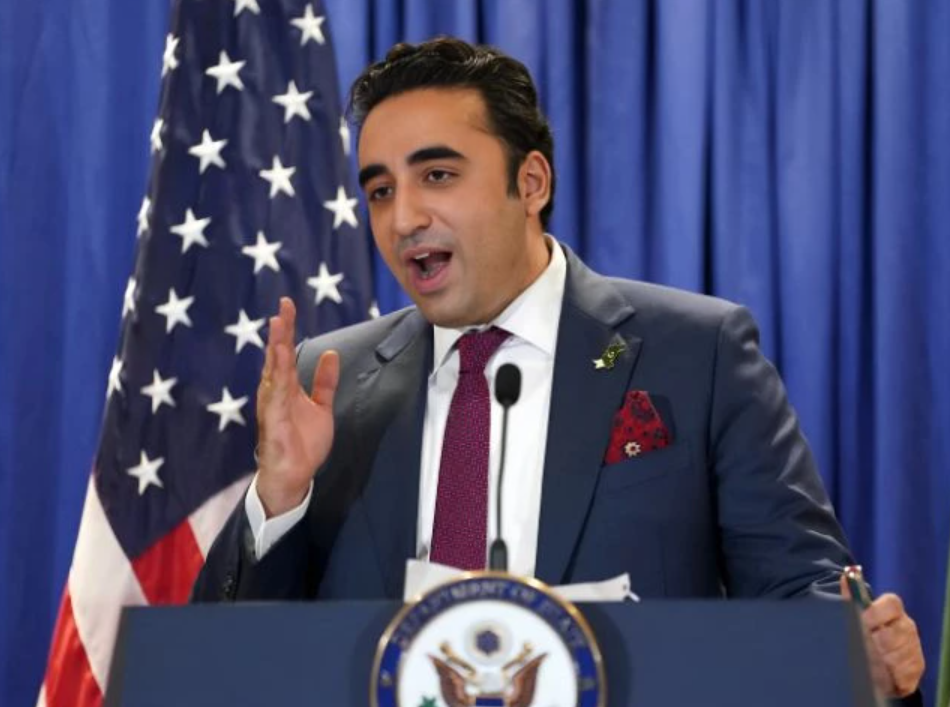
Pakistan Peoples Party (PPP) Chairman Bilawal Bhutto Zardari has cautioned that despite a recent US-mediated ceasefire between India and Pakistan, the region remains vulnerable to a full-scale conflict. Speaking to US network Newsmax, Bilawal emphasized that while the ceasefire—facilitated in part by former US President Donald Trump and his team—is a significant step, true peace has yet to be secured.
“We have achieved a ceasefire between India and Pakistan, thanks to President Trump, his team, and Secretary Rubio. The US deserves credit for that,” Bilawal said. “But a ceasefire is not peace, and right now South Asia is actually less safe than before the conflict.”
Bilawal, who also chairs Pakistan’s Parliamentary Diplomatic Committee, warned that the risk of war remains high, especially if any cross-border terrorist attacks occur, particularly in the disputed region of Indian Illegally Occupied Jammu and Kashmir (IIOJK).
“Any terrorist attack in India or IIOJK would mean war between India and Pakistan, which is unsustainable,” he said. The tension followed a deadly attack in Pahalgam last month, which killed 26 Indian tourists, triggering airstrikes by India on Pakistani territory and a retaliatory response from Pakistan. A ceasefire brokered by the US on May 10 halted further military actions.
Bilawal stressed that Pakistan’s acceptance of the ceasefire came after consultations with Washington and should mark the beginning of a sustained peace process. “This is just the start,” he said, urging dialogue at a neutral venue and comprehensive talks on all points of friction with India.
While expressing confidence in the current US administration’s commitment to regional stability, Bilawal voiced concerns that the Indian government might undermine peace efforts. “I suspect India will try to sabotage the President’s efforts,” he said, adding that the US should use its influence to encourage India toward meaningful dialogue with Pakistan.
Highlighting Trump’s unique position, Bilawal praised the former president for having the trust of both nations. “President Trump is currently the one person who can bring peace between India and Pakistan. He is friends with both sides and can convince us to get along.”
Kashmir, he insisted, must be addressed as the core issue. “Ignoring Kashmir only fuels the creation of terrorists and ongoing violence,” he warned.
On counterterrorism, Bilawal noted past successful cooperation between the US and Pakistan. “After his election, President Trump publicly thanked Pakistan for its cooperation.”
He also accused India of “weaponizing water” by threatening to cut water supplies to Pakistan, an act he said violates international law, and called on the global community to condemn this.
On economic matters, Bilawal said discussions with US officials have shifted toward trade and investment, focusing on agriculture and mineral sectors. However, he stressed that lasting peace is essential for attracting foreign investment. “If peace prevails, business will grow. Continued aggression and support for terrorist proxies in Balochistan will hinder progress, regardless of how well trade talks go.”