
By: A.R Manj
As India and Pakistan navigate renewed tensions over Kashmir, China stands to benefit from a unique window into its regional rival’s military tactics and capabilities, analysts say.
The recent military flare-up between India and Pakistan — reportedly involving advanced fighter jets and air-to-air engagements — has presented China with a rare opportunity to closely observe Indian military operations in real-time, offering valuable data for its own strategic assessments.
Security analysts and diplomats suggest that China’s modernized military, equipped with a sophisticated web of border monitoring systems, naval assets in the Indian Ocean, and one of the world’s largest satellite constellations, is well-positioned to capture critical intelligence on India’s defense posture.
“This is a unique intelligence windfall for China, right on its doorstep, involving a principal regional adversary,” noted Alexander Neill, a Singapore-based security expert.
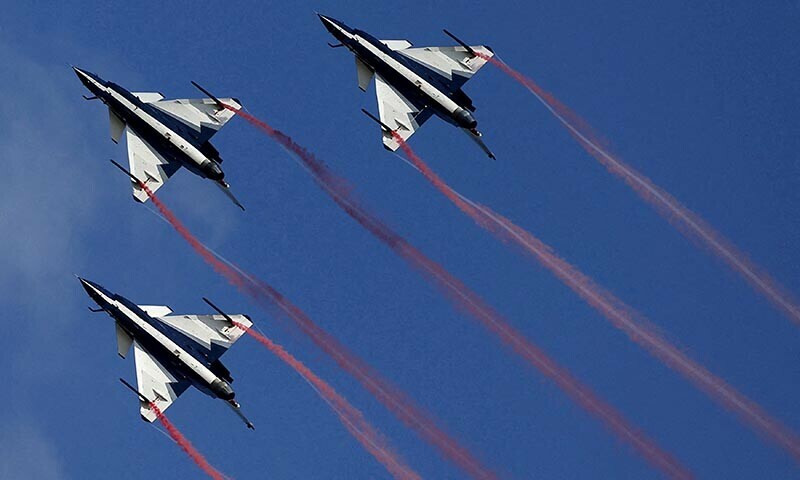
According to U.S. officials, during the latest escalation, a Chinese-made Pakistani J-10 fighter allegedly downed two Indian aircraft, one of which was a French-built Rafale. While India has not acknowledged the losses, Pakistani ministers have confirmed the deployment of J-10 jets, withholding specifics on weapon systems used.
The incident provides a live combat scenario for military observers globally, a rare opportunity to analyze pilot tactics, aircraft performance, and missile effectiveness — insights that are invaluable for air force preparedness and future strategy development.
India and China, both nuclear-armed powers with longstanding border disputes, have seen tensions escalate since 2020 despite a recent patrol agreement aimed at easing standoffs. Behind the scenes, however, China’s edge in intelligence gathering remains significant.
The London-based International Institute for Strategic Studies (IISS) reports that China currently operates 267 satellites — including 115 dedicated to intelligence, surveillance, and reconnaissance, and another 81 targeting signals and electronic intelligence. This extensive space-based capability significantly outpaces regional players like India and is second only to the United States.
“China is far better equipped now to monitor military developments in real time, both through space assets and missile tracking systems,” said Neill, also an adjunct fellow at the Pacific Forum think tank.
Neither China’s defense ministry nor Pakistan’s military responded to requests for comment regarding intelligence coordination. However, Pakistan has previously affirmed its “all-weather strategic cooperative partnership” with Beijing — a relationship that analysts believe includes robust military and intelligence cooperation.
India, meanwhile, has remained tight-lipped on the situation. Speaking to Sky News, Indian High Commissioner to the UK, Vikram Doraiswami, downplayed concerns over China’s ties with Pakistan, stating, “China requires a relationship with all of its neighbours, that includes us.”
Intelligence Targets: Air Defenses, Missiles, and More
According to analysts, Chinese military teams are particularly interested in monitoring India’s deployment of air defense systems and potential launches of cruise or ballistic missiles — especially the BrahMos, a high-speed cruise missile developed jointly with Russia, which has yet to be used in combat.
At sea, China has expanded its intelligence presence in the Indian Ocean through a mix of official and unofficial means. Open-source intelligence analysts have tracked a growing number of Chinese vessels — including fishing boats suspected of performing militia duties — operating near Indian naval exercises.
On May 1, a fleet of 224 Chinese vessels was spotted within 120 nautical miles of Indian drills in the Arabian Sea. Analysts believe such coordinated deployments serve a dual purpose: harvesting naval intelligence and testing India’s response capabilities.
“These vessels may double as floating listening posts, relaying naval activity and reaction times back to their sponsors,” noted open-source intelligence researcher Damien Symon on X (formerly Twitter).
Although Beijing rarely acknowledges the intelligence roles of civilian vessels, Western and regional experts widely believe that such deployments are part of China’s broader maritime surveillance strategy.
With deep strategic and defense ties to Islamabad, China is also expected to leverage its presence in Pakistan to access valuable frontline intelligence. Chinese military advisers embedded in Pakistani defense institutions are likely facilitating the transfer of crucial operational data back to Beijing.
“Given Pakistan’s import of some of China’s most advanced military technology, it’s certain the PLA is well-placed to gain real-time battlefield insights,” said James Char, a China security analyst at Singapore’s S. Rajaratnam School of International Studies.