• Only 67 treasury members present—short of 84-member quorum
• PTI voices silenced amid state media blackout
ISLAMABAD: The government suffered an embarrassing blow in the National Assembly on Thursday when the opposition successfully derailed the passage of the Income Tax (Amendment) Bill 2024 by exploiting the treasury’s failure to maintain quorum during proceedings.
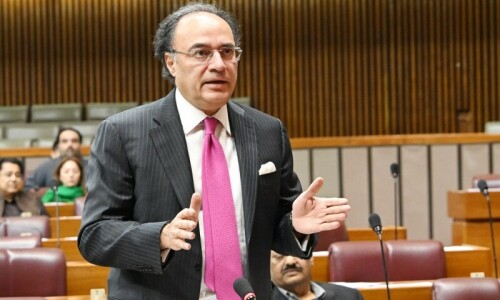
The situation unfolded when Finance Minister Muhammad Aurangzeb moved a motion to pass the bill. However, the motion was defeated by a 67-32 vote. With only 67 treasury lawmakers present—17 short of the required 84 in the 336-member house—the opposition saw an opportunity.
After Deputy Speaker Ghulam Mustafa Shah announced the vote result, Pakistan Tehreek-i-Insaf (PTI) lawmakers walked out, leaving behind their colleague Aamir Dogar to formally point out the lack of quorum. This happened just after two of the bill’s three clauses had been approved via voice vote.
In response, the deputy speaker called for a headcount and suspended proceedings to allow time for meeting the quorum. Despite the delay, the government failed to gather enough members, and attendance dropped even further below 67.
When the session resumed after a 30-minute break, the deputy speaker had no choice but to adjourn the sitting until Friday morning, postponing the planned approval of five bills, including the Income Tax amendment.
The bill had been previously implemented via ordinance but must now be passed by the assembly to remain in effect, as the ordinance nears the end of its constitutional lifespan. The legislation aims to address challenges faced by taxpayers related to high tax rates on federal government securities and to standardize tax rates on the business income of banking institutions.
State Media Censors Opposition
In parallel, opposition lawmakers—especially from the PTI—continued to face a near-total blackout in state-run media coverage and on the National Assembly’s official social media platforms.
During Thursday’s session, the proceedings were not live-streamed on the National Assembly’s YouTube and Facebook pages. Meanwhile, Pakistan Television (PTV) only broadcast speeches made by government members.
This follows a pattern of selective censorship. On May 6, when Opposition Leader Omar Ayub Khan criticized the media restrictions, Speaker Ayaz Sadiq defended the censorship, stating that he had the authority to expunge remarks deemed “against national interest.”
Previously, live coverage was also halted during a parliamentary debate on Pakistan-India tensions following the Pahalgam attack. At that time, an official from the National Assembly Secretariat claimed the suspension was due to the sensitivity of the issue, with assurances that live-streaming would resume soon.
Though editing or censoring certain portions of speeches has become common, the complete exclusion of opposition voices from official coverage—especially during key debates and question hour—is unprecedented.
When asked for comment, the government offered no response. However, a senior National Assembly official confirmed to PakCorrespondent that the decision to blackout opposition members had been made under instructions from Speaker Sadiq.