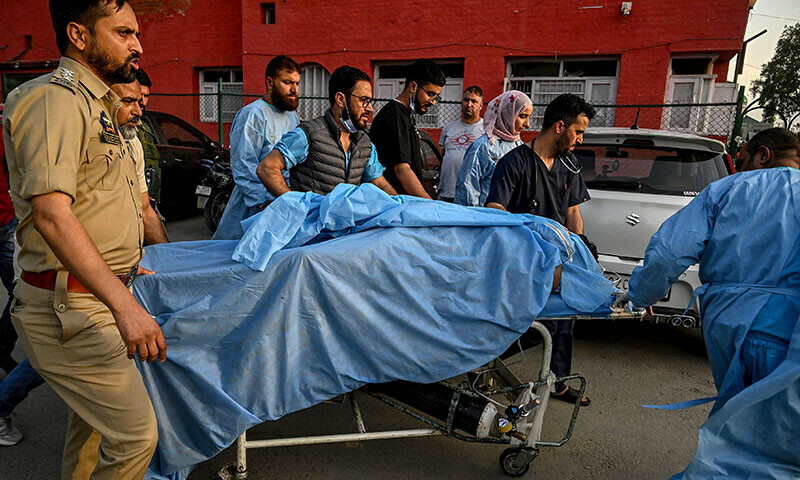
Pahalgam, April 22 – In one of the deadliest attacks on civilians in recent years, at least 24 people were killed when gunmen opened fire on a group of tourists in Indian-occupied Kashmir, according to a senior police official.
The incident occurred in Pahalgam, a scenic town in the Muslim-majority region popular among summer tourists. The gunfire erupted suddenly, causing panic among visitors. Eyewitnesses described a chaotic scene, mistaking the shots for firecrackers before realizing the gravity of the situation.
Multiple security sources, speaking anonymously, reported conflicting death tolls ranging between 20 and 26. The official count has yet to be confirmed by authorities.
Injured victims were rushed to a hospital in Anantnag. Paramedics reported treating several patients with gunshot wounds, including at least one person who had been shot in the neck.
A local tour guide, Waheed, said he arrived at the scene after hearing gunfire and helped evacuate some of the wounded on horseback. “I saw a few men lying on the ground, appearing lifeless,” he told AFP.
Responsibility and Motive
A little-known group calling itself the “Kashmir Resistance” claimed responsibility via a social media post. The message denounced what it termed the forced settlement of over 85,000 “outsiders” in the region, warning of continued violence against those involved in demographic changes. Reuters was unable to independently verify the authenticity of the claim.
Local authorities recently stated that nearly 84,000 people from other parts of India have been granted domicile status in the region over the past two years.
Reactions and Condemnations
Former Jammu and Kashmir Chief Minister Mehbooba Mufti condemned the attack, calling it “cowardly.” She confirmed at least five deaths and several injuries. Current Chief Minister Omar Abdullah said the full extent of the tragedy is still being determined but acknowledged the attack as one of the largest targeting civilians in years.
Prime Minister Narendra Modi vowed justice for the victims. “Those behind this heinous act will not be spared,” he declared on X (formerly Twitter), adding that India’s fight against terrorism remains “unshakable.”
Home Minister Amit Shah announced he would travel to Kashmir to oversee security measures. “We will come down heavily on the perpetrators,” he said in a statement.
Opposition leader Rahul Gandhi described the killings as “heartbreaking” and called on the government to take responsibility for the region’s security.
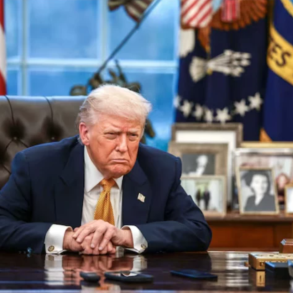
U.S. Vice President JD Vance, who is on a private visit to India, also expressed condolences. Former President Donald Trump posted on Truth Social that “India has the full support of the United States” and called the attack “deeply disturbing.”
Background: Tensions in the Region
Violence in Kashmir has declined in recent years, but sporadic attacks still occur. The last major assault on tourists happened in June 2024, when nine Hindu pilgrims were killed and 33 injured after their bus plunged into a gorge following a militant attack.
India revoked the region’s limited autonomy in 2019 and reorganized it into two federally administered territories, prompting domestic and international criticism. The move enabled non-residents to acquire land and jobs, sparking fears of demographic changes and triggering resistance from locals and separatist groups.
Despite ongoing tensions, Kashmir has seen a surge in domestic tourism. Over 3.5 million visitors traveled to the region in 2024, with the government promoting the area as a safe travel destination. High-profile events, including a G20 tourism meeting, were held in Srinagar under heavy security to showcase a return to normalcy.