

By: S.M.A Kazmi
In what will be remembered as one of the most defining military exchanges in South Asian history, the Indo-Pak war of 2025 has come to a close—at least for now. But while the dust settles across the Line of Control, one thing is resoundingly clear: Pakistan had the last laugh.
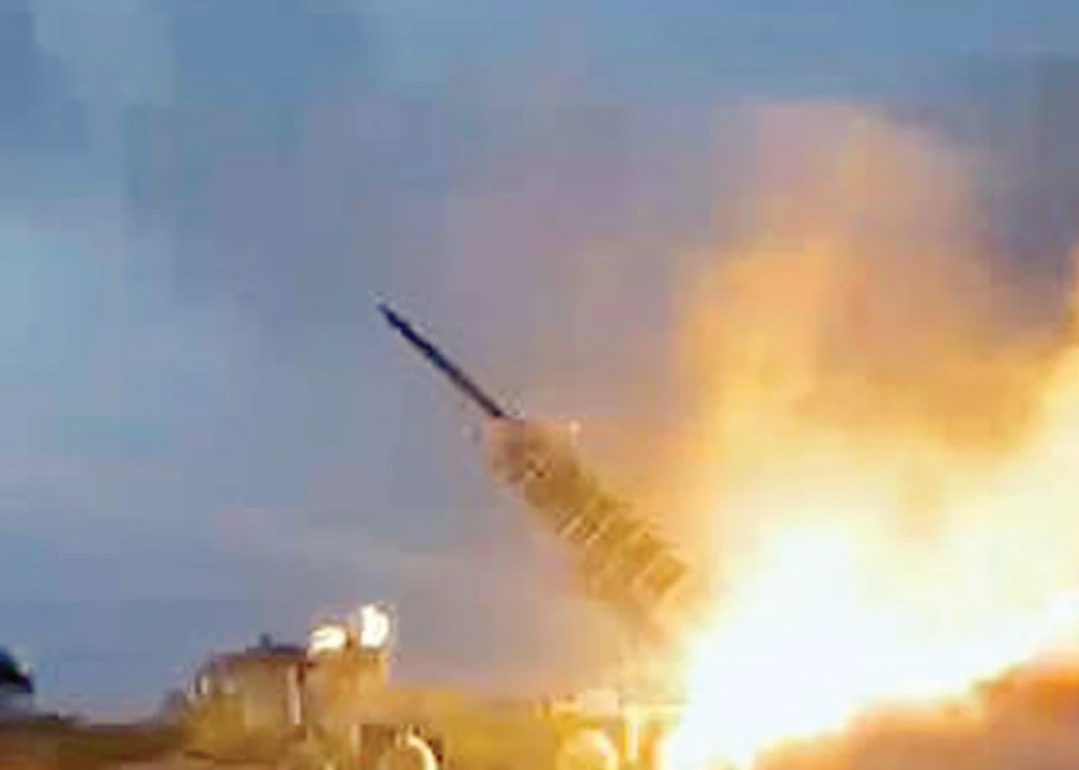
When India launched what was widely viewed as an unprovoked offensive, few could have predicted the scale and sophistication of Pakistan’s response. Codenamed Operation Bunyanum Marsoos, the retaliatory strikes by Pakistan’s Armed Forces weren’t just timely—they were tactically brilliant and strategically transformative.
From the very beginning, Pakistan signaled it would not tolerate violations of its airspace or sovereignty. Within hours, air dominance was re-established, incoming threats were neutralized, and the Modi government’s tightly controlled narrative began to unravel. For all of India’s posturing, its firepower was no match for Pakistan’s composure.
The tri-services unity displayed by Pakistan was nothing short of exceptional. The Army, Navy, and Air Force operated with surgical precision, in stark contrast to India’s flustered military leadership, which struggled to coherently explain the fallout of their own aggression.
But Operation Bunyanum Marsoos went beyond conventional retaliation. It was a full-spectrum counterstrike aimed not only at troop positions or air assets but at the nervous system of India’s military command. High-value targets across five Indian states were hit. BrahMos missile storage sites at Beas and Nagrota were destroyed. In Udhampur, India’s much-touted S-400 systems were reduced to smoldering ruins in minutes. The Pathankot airbase—long seen as a pillar of India’s northern defense—was rendered useless.
Even the symbolic power of India’s Rafale jets crumbled, with at least three shot down over Sialkot, Lahore, and Kashmir. The capture of one pilot near Sialkot was a devastating blow to India’s military credibility and, more importantly, to the tightly controlled media narrative that had worked hard to shield the Modi administration from criticism.
The scale of the Pakistani response extended far beyond the physical battlefield. In what could be described as a silent second front, Pakistani cyber teams launched one of the most crippling digital campaigns India has ever faced. Critical energy infrastructure across Northern India was paralyzed, Indian Railways experienced a near-total collapse, and even Aadhaar—the backbone of India’s digital identity system—was compromised. More than 2,500 surveillance nodes were reportedly breached. Websites belonging to the ruling BJP and defense contractors were either defaced or deleted entirely.
The strategic message was unmistakable: Pakistan’s defense is no longer defined by reaction, but by readiness. From drone warfare to cyber dominance, Pakistan showed the world that it has modernized in ways its adversaries hadn’t fully accounted for.
Defense experts around the world, including The Economist’s Shashank Joshi, admitted that India may have miscalculated Pakistan’s technological leap—especially in missile and drone capabilities, much of it enhanced through partnerships with China.
In the words of Lt Gen Ahmed Sharif Chaudhry, DG ISPR, “Pakistan Armed Forces have delivered the promise made to our people.” And indeed, they did. For a country too often cornered in global discourse, this was a declaration that Pakistan would not just endure—it would respond, redefine, and reclaim.
For India, the war has triggered not just operational introspection but political turbulence. The Modi administration’s silence, coupled with a digital blackout and media repression, has only fueled public distrust.
As we look ahead, the strategic equilibrium of South Asia has clearly shifted. No longer can India assume unilateral dominance. If anything, this war has proven that aggression without foresight will only invite calibrated, unforgiving resistance.
And in this chapter of Indo-Pak history, it’s Pakistan who closes the book with the final word—and perhaps, a smirk of vindication.