QINGDAO – June 27:
India faced a diplomatic setback at the Shanghai Cooperation Organization (SCO) Defence Ministers’ meeting on Thursday after member states refused to endorse New Delhi’s attempts to single out Pakistan over terrorism.
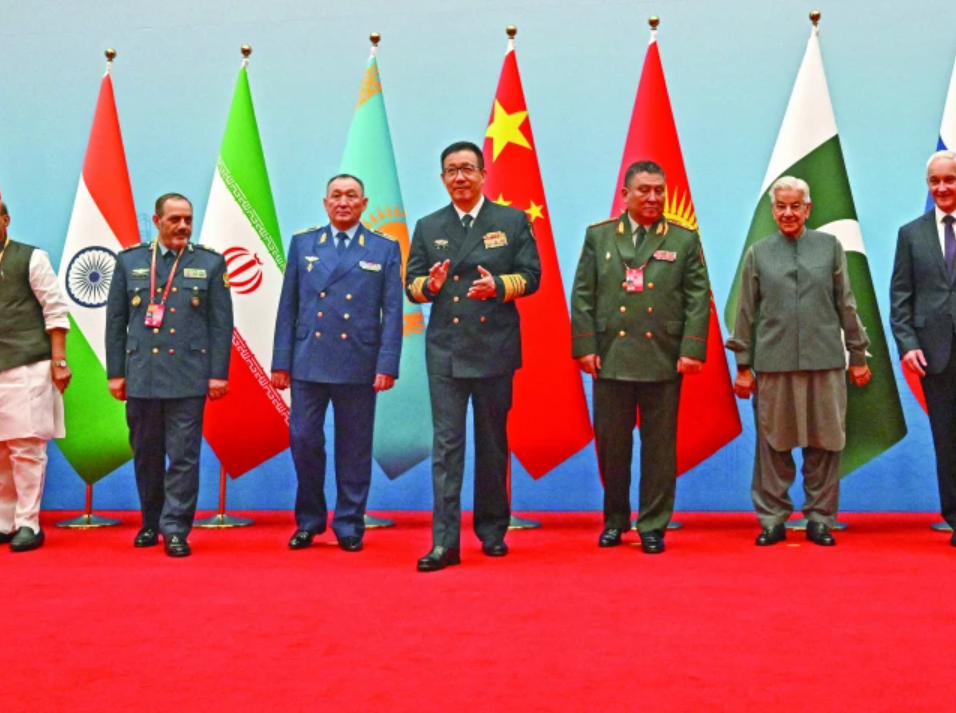
The high-level summit, held in the Chinese city of Qingdao, brought together defence ministers from the 10-member bloc including China, Russia, Iran, Pakistan, India, and others. The meeting concluded without a joint communiqué — a result of India’s refusal to sign the draft, which included references to terror attacks in Pakistan’s Balochistan but excluded the recent Pahalgam incident India had sought to highlight.
Diplomatic insiders revealed that India’s efforts to politicize the forum were firmly rejected by the majority of SCO members. While the draft statement was accepted by all countries except India, New Delhi’s objections led the host nation China to drop plans to release the final communiqué.
Sources described the outcome as a significant diplomatic win for Pakistan, with officials crediting Islamabad’s consistent position and the failure of India to provide credible evidence regarding the Pahalgam attack.
Despite attempts by Indian media to portray Defence Minister Rajnath Singh as standing firm, even domestic voices have acknowledged the diplomatic failure. Former foreign minister Yashwant Sinha, a senior BJP leader, posted on X:
“India stands completely isolated. The SCO statement ignored the Pahalgam attack but mentioned Balochistan. This is a total failure of the Modi government. The Prime Minister should resign.”
During his address to the SCO, Rajnath Singh avoided naming Pakistan directly but urged members to act against countries that “use cross-border terrorism as a tool of state policy” and “provide safe havens to terrorists.” He claimed the draft statement echoed Pakistan’s narrative, as it omitted Indian concerns while highlighting attacks in Balochistan.
Pakistan’s Defence Minister Khawaja Asif responded sharply, condemning the Pahalgam incident but reminding members that the region is a disputed territory under illegal occupation, according to international recognition. He reiterated Pakistan’s commitment to SCO principles and called for collective efforts against terrorism, free from political bias.
“We urge all states to hold accountable those who plan and finance attacks like the Jaffar Express bombing in Balochistan,” Asif stated.
He also underscored the need for peaceful resolution of long-standing conflicts, especially Kashmir, warning that such disputes pose ongoing threats to regional and global stability.
“Unresolved issues like Kashmir cannot be ignored. They are a constant risk to peace and security,” he said.
Asif concluded by calling for unity in combating terrorism and urged SCO members to avoid politicising joint counter-terrorism initiatives.
The episode has reinforced the growing perception of India’s isolation on multilateral platforms when attempting to rally support against Pakistan. Meanwhile, Pakistan emerged with strengthened diplomatic standing, bolstered by widespread support among regional allies at the SCO.