
India has begun forcibly returning individuals it labels as illegal immigrants into Bangladesh—a move that is drawing sharp criticism from human rights advocates who argue that many of those expelled are being targeted arbitrarily and without due process.
Since May, authorities in Assam have pushed back 303 people into Bangladesh out of the roughly 30,000 declared foreigners by various tribunals over the years, a senior official confirmed. These individuals are often long-term residents of Assam, with deep community ties, family, and land—many tracing their ancestry to Bangladesh.
Critics argue the pushbacks disproportionately affect poor Muslim residents, who are often unable to legally challenge tribunal rulings in higher courts. Some activists, speaking anonymously due to fears of retaliation, alleged that the recent drive has largely targeted Muslims. The Assam government has yet to publicly respond to these concerns.
The expulsions are reportedly gaining political traction in Assam, where tensions persist between local Assamese speakers and Bengali-speaking populations over employment and resources. Assam shares a 260-km border with Bangladesh, and efforts to remove “declared foreigners” have intensified following pressure from India’s Supreme Court to enforce tribunal rulings.
“We’ve pushed back 303 people, and this process will intensify,” said Assam Chief Minister Himanta Biswa Sarma during a state assembly session. He emphasized the need to “act more proactively to save the state,” responding to the court’s February directive questioning the lack of deportations.
Bangladesh has yet to officially comment on the developments. However, Foreign Affairs Adviser Touhid Hossain acknowledged last week that people were being sent into Bangladesh and said discussions with New Delhi were ongoing.
Aman Wadud, a lawyer and opposition Congress party member who works on citizenship cases in Assam, accused the government of acting unlawfully. “People are being arbitrarily thrown out of the country. There is widespread fear,” he said.
In one troubling incident, Khairul Islam, a former schoolteacher declared a foreigner in 2016, described being detained, blindfolded, and taken to the border alongside 31 others. Fourteen of them, including Islam, were pushed across the border into Bangladesh. Local villagers alerted Bangladeshi authorities, who placed the group in no man’s land before Islam was eventually returned to India after his wife petitioned the police, citing an ongoing court case.
“I was terrified,” Islam recalled. “We stood in the open all day under the sun. Eventually, I was brought back. But I don’t know what happened to the others.”
Assam officials maintain that no Indian citizens will be expelled and confirmed that a few deported individuals have already been returned while their appeals are under review.
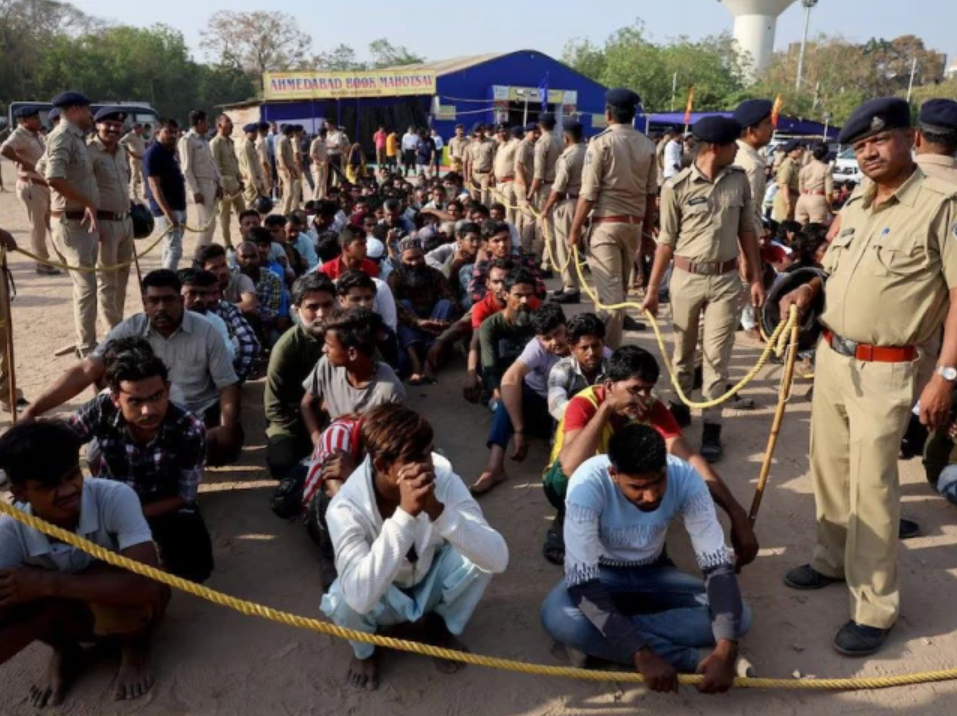
Beyond Assam, other Indian states are following suit. In Ahmedabad, Gujarat, police say over 250 individuals identified as Bangladeshi nationals are being prepared for deportation.
“The deportation process is underway,” confirmed senior police officer Ajit Rajian.
As India steps up its crackdown on undocumented immigrants, activists warn that vulnerable communities are being swept up in a system that offers little recourse and often no clear path to justice.