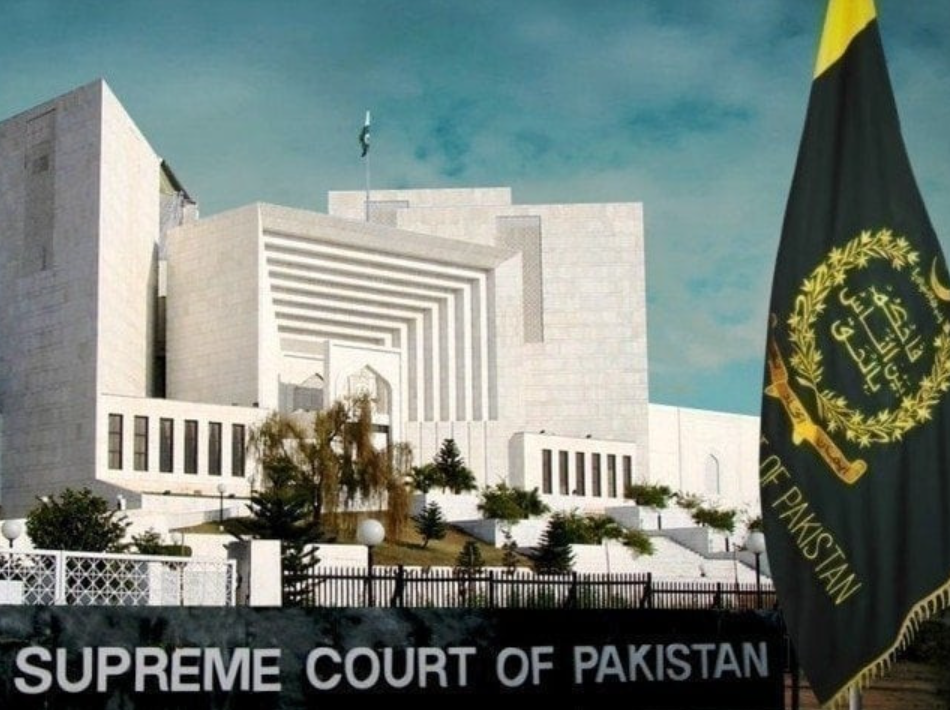

A review of the Supreme Court’s latest judgment and its wide-ranging implications for Pakistan’s political and constitutional landscape
In a landmark development with sweeping political consequences, the Supreme Court of Pakistan’s constitutional bench (CB) has overturned its own July 12, 2024 majority judgment that had reinstated Pakistan Tehreek-e-Insaf (PTI) as a parliamentary party and allowed it access to reserved seats. The decision marks a major legal victory for the ruling coalition and a dramatic reversal in PTI’s post-election trajectory.
The Judgment
In its short order issued Friday, the 10-member bench—led by Justice Aminuddin Khan—allowed all civil review petitions by a 7-judge majority, effectively nullifying the previous majority decision that had granted PTI and its affiliate, the Sunni Ittehad Council (SIC), the right to claim reserved seats in national and provincial legislatures. The bench also reinstated the earlier ruling of the Peshawar High Court, which denied the SIC’s claim to reserved seats.
According to the order, Civil Appeals No. 33 and 334 of 2024, filed by the SIC, have been dismissed, with reserved seats now to be redistributed among other parliamentary parties — excluding the SIC.
This ruling is set to alter the balance of power in the assemblies, potentially giving the ruling coalition a two-thirds majority — a threshold that opens the door to constitutional amendments.
Legal and Political Backdrop
The dispute originated from PTI’s disqualification from reserved seats due to the nullification of its intra-party elections by the Election Commission of Pakistan (ECP) in December 2023. As a result, most PTI candidates contested the February 2024 general elections as independents. After winning 80 National Assembly seats, they joined the SIC to qualify for reserved seats — a move blocked by the ECP and later challenged in court.
On July 12, a full bench of the Supreme Court had ruled 8–5 in PTI’s favor, restoring its parliamentary status and granting a pathway to reclaim reserved seats. That ruling is now overruled by the CB’s review order.
Key Legal Takeaways
- The CB held that only political parties that met constitutional and legal preconditions — such as contesting under a common symbol, submitting priority lists, and winning at least one general seat — were entitled to reserved seats under Articles 51 and 106.
- The majority found governance and procedural failures in PTI’s post-election maneuvers through the SIC and restored the PHC’s earlier position.
- Notably, the bench’s composition changed during proceedings: two judges who had previously ruled in favor of PTI recused or reversed their earlier stances, raising eyebrows over judicial consistency and internal divisions within the court.
Reactions and Criticism
The verdict has triggered sharp criticism from legal experts, political analysts, and civil society:
- Faisal Siddiqi, SIC’s lead counsel, described the ruling as the “final act in the saga of electoral theft,” blaming it on a judiciary that has failed to safeguard democracy.
- Barrister Asad Rahim Khan decried the decision as “a judicial tragedy,” arguing that the ruling awarded seats won by one party to losing parties — an unprecedented move in Pakistan’s legal history.
- Abdul Moiz Jaferii termed the decision part of a broader pattern of judicial erosion, stating that these verdicts are reshaping the constitutional order in ways future generations must scrutinize, either as a warning or precedent.
- Others, however, defended the decision. Hafiz Ehsaan Ahmed Khokhar called it a necessary correction that reaffirmed the Constitution’s text and intent, restoring legal discipline in the allocation of reserved seats.
Implications
The decision has profound political ramifications:
- PTI’s exclusion from Parliament: With no access to reserved seats, PTI’s representation in the assemblies diminishes significantly. This affects not only its legislative strength but also its ability to contest future Senate elections, particularly in Khyber-Pakhtunkhwa.
- Ruling coalition’s supermajority: The redistribution of nearly 80 reserved seats among the ruling parties could cement their dominance and facilitate constitutional changes.
- Judicial credibility under strain: The ruling has intensified ongoing debates about judicial independence and the perception of partisan rulings post-18th and 26th constitutional amendments.
Conclusion
The Supreme Court’s latest review verdict is a turning point in Pakistan’s ongoing political crisis. While proponents see it as a reaffirmation of constitutional discipline, critics argue it marks a judicial capitulation with far-reaching consequences for democratic norms. Regardless of where one stands, the decision undeniably reshapes the post-election power dynamics — leaving PTI further marginalized and the government emboldened with an enhanced parliamentary majority. As legal scholars and political observers continue to dissect the judgment, its legacy will likely shape constitutional discourse for years to come.