SEOUL:
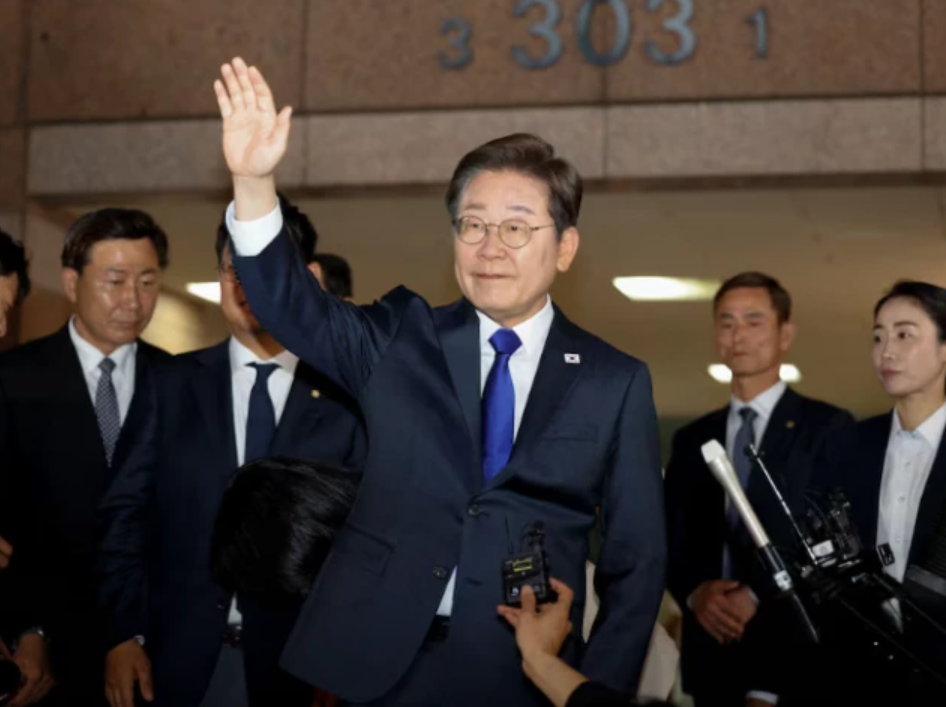
Lee Jae-myung, a former factory worker and human rights lawyer, has been elected as South Korea’s 14th president, securing over 49% of the vote in a high-stakes election that followed the political turmoil and impeachment of former President Yoon Suk Yeol.
According to Yonhap News, the 61-year-old Democratic Party (DP) candidate won the presidency with 49.42% of the vote, defeating Kim Moon-soo of the ruling People Power Party. Voter turnout reached 79.4%—the highest in nearly three decades—reflecting the nation’s heightened political engagement following December’s failed martial law attempt by Yoon.
Lee’s victory marks a significant comeback. Once embroiled in multiple legal and political controversies, he emerged as a key figure in opposing Yoon’s brief declaration of martial law on Dec. 3, which led to Yoon’s impeachment by the Constitutional Court. The crisis catapulted Lee into the national spotlight and helped solidify his candidacy.
Despite his win, Lee still faces legal challenges. He is awaiting retrial on charges of making false statements during his 2022 presidential campaign, after South Korea’s Supreme Court overturned a lower court’s acquittal just weeks before the election.
Humble Beginnings
Born in 1963 in the mountain village of Andong, North Gyeongsang Province, Lee’s early life was marked by poverty. He began working in a factory in Seongnam after elementary school to support his family. At age 13, he suffered a permanent arm injury when his wrist was crushed in a press machine.
The fifth of seven siblings, Lee overcame hardship by passing high school and university entrance exams in 1978 and 1980. He went on to study law at Chung-Ang University on a full scholarship and passed the bar exam in 1986.
He married Kim Hye-kyung in 1992 and the couple has two children. Before entering politics in 2005, Lee spent nearly 20 years as a human rights lawyer, often advocating for labor rights and marginalized communities.
Political Career and Resilience
Lee entered politics through the social-liberal Uri Party, a predecessor to the Democratic Party. He served as mayor of Seongnam (2010–2018), then as governor of Gyeonggi Province (2018–2021). In 2022, he was elected to the National Assembly, representing Incheon.
He first sought the presidency in 2017 but lost the Democratic Party primary to Moon Jae-in. In 2022, he ran again and narrowly lost to Yoon Suk Yeol by just 0.73%.
In January 2024, Lee survived an assassination attempt during a public event, where he was stabbed in the neck. Authorities later said the attacker’s motive was to prevent Lee from becoming president.
A President Backed by the People and Parliament
Lee is the first DP president to take office with a friendly majority in the National Assembly, giving him significant legislative support. Under his leadership, the party secured a majority in the 300-seat parliament in last year’s elections.
Known for his bold and sometimes confrontational political style, Lee has built a loyal base among South Korea’s working and middle classes. His modest background and outspoken advocacy have drawn admiration, particularly from those outside the country’s elite circles.
In his memoir, Lee described his childhood as “miserable,” and said his upbringing often invited ridicule from the upper class. Nevertheless, his perseverance and populist appeal have helped him climb from a factory floor to South Korea’s highest political office.