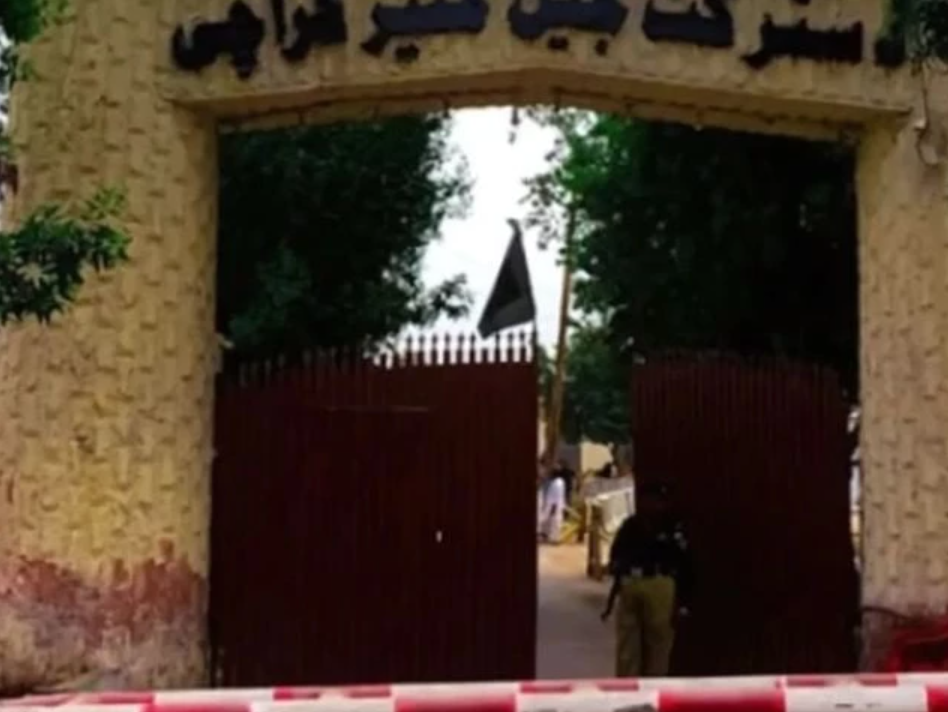
KARACHI – Authorities have recaptured 94 out of 216 prisoners who escaped from Karachi’s District Malir Jail in what officials are calling one of Pakistan’s most significant jailbreaks. The manhunt continues for the remaining 122 fugitives, with intensified operations underway across the city.
The escape took place late on June 2, following an earthquake that prompted jail authorities to move inmates into the yard for safety. This precautionary move quickly spiraled into chaos as thousands of prisoners surged toward the Mari Gate. Amid the confusion, prisoners broke the gate’s locks and scaled the prison walls to flee.
Officials confirmed on Tuesday night that three more escapees were arrested, raising the total to 94. A First Information Report (FIR) has been registered at Shah Latif Town Police Station by Deputy Superintendent Zulfiqar Ali Pirzada. The charges include terrorism, attempted murder, robbery, and assault on law enforcement.
Voluntary Returns and Public Cooperation
Some inmates have chosen to return voluntarily. One such prisoner, Asif, serving a sentence for theft under Section 380 of the Pakistan Penal Code, turned himself in. Describing the jailbreak, he said, “As soon as the earthquake hit, everyone rushed out — there was no one to stop us.” Expressing regret, he said he wanted to finish his sentence, having already spent 10 months in jail.
In another case, a mother returned her son and his friend—one of whom was a drug addict—after they arrived home early in the morning following the jailbreak. She expressed hope that jail time would aid in her son’s recovery.
Authorities have encouraged other escapees to return voluntarily, offering leniency to those who do so within 24 hours. Sindh Senior Minister Sharjeel Inam Memon stated that prisoners who fail to surrender will face up to seven years in additional charges under jailbreak laws.
Government Response and Security Failures
Sindh Chief Minister Murad Ali Shah has launched a high-level inquiry into the incident. He chaired an emergency meeting and directed Chief Secretary Asif Hyder Shah to lead the investigation with Karachi Commissioner Hassan Naqvi and Police Chief Javed Alam Odho. The CM criticised the prison administration for failing to promptly alert law enforcement during the crisis and ordered a province-wide security audit of all prisons.
In a press briefing, Murad Shah said the jailbreak was the result of “a complete breakdown in communication and preparedness” and vowed that negligent officials would be held accountable. Inspector General of Prisons Qazi Nazir has been removed from his post, while DIG Prisons Hassan Sehto and Malir Jail Superintendent Arshad Hussain have been suspended.
Violent Breakout and Widespread Panic
The jailbreak turned violent when one prisoner seized a police officer’s rifle and opened fire, injuring two Frontier Corps (FC) personnel and one police officer. Other inmates attacked guards with stones and sticks. The gunfire caused panic, forcing a temporary shutdown of traffic on the National Highway and road closures from Quaidabad to Malir Jail.
In the early hours, police and Rangers launched a massive operation, arresting 50 inmates from the jail compound, 19 from various vehicles by Malir City police, and 8 more by Sukhan police. Roadblocks were set up, and announcements were made via mosque loudspeakers urging the public to report fugitives.
Locals captured videos of the escapees—many barefoot and shirtless—fleeing through the streets and in rickshaws. Police teams are now conducting door-to-door searches, and ID checks are being enforced in surrounding neighborhoods.
Broader Implications and Ministerial Oversight
Sindh Home Minister Zia ul Hassan Lanjar described the event as “one of the largest jailbreaks in Pakistan’s history.” He emphasized the need for tighter surveillance, improved intelligence coordination, and swift departmental action against those found negligent.
Inspector General Sindh Ghulam Nabi Memon, who visited the jail for an on-site briefing, noted that many of the escaped prisoners were held on narcotics charges and some had mental health issues.
As the search continues, authorities have urged the public to remain vigilant and assist in locating the escapees. The government has reiterated its commitment to restoring order and preventing similar security lapses in the future.