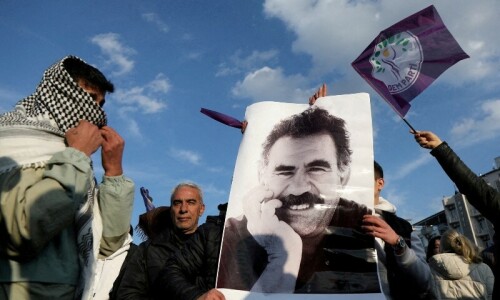

The Kurdistan Workers’ Party (PKK) has formally announced its dissolution and the end of its armed insurgency against the Turkish state, concluding more than 40 years of conflict. The decision was revealed on Monday by the pro-Kurdish ANF news agency following the PKK’s 12th Congress.
“The 12th PKK Congress has decided to dissolve the PKK’s organisational structure and end its method of armed struggle,” the group said in an official statement.
This landmark move follows a call earlier this year by PKK founder Abdullah Ocalan, who has been imprisoned on an island near Istanbul since 1999. In a letter released in February, Ocalan urged the group to disarm and formally disband. The PKK leadership responded positively, subsequently announcing a ceasefire and agreeing to convene a congress to institutionalize the decision.
On Saturday, Turkish President Recep Tayyip Erdoğan alluded to the potential disbandment, expressing his administration’s resolve to eradicate terrorism. “We are advancing with firm steps on the path to the goal of a terror-free Türkiye,” Erdoğan said.
The news has also received international acknowledgment. Pakistani Prime Minister Shehbaz Sharif praised the development as a major stride toward regional peace.
“This historic development reflects the unflinching resolve of the Turkish leadership, under my dear brother President Recep Tayyip Erdoğan, and the Turkish nation to continue their march toward reconciliation, unity, and stability,” Sharif stated on social media platform X. He reaffirmed Pakistan’s commitment to combating terrorism alongside Türkiye.
The PKK, which emerged in 1984 with the aim of establishing an independent Kurdish state, is classified as a terrorist organization by Türkiye, the United States, and the European Union. Over the decades, its insurgency has resulted in over 40,000 deaths. While various peace efforts have been made since Ocalan’s imprisonment, the conflict had largely persisted until now.
The group’s dissolution marks a potentially transformative moment in Turkish-Kurdish relations and regional security dynamics.