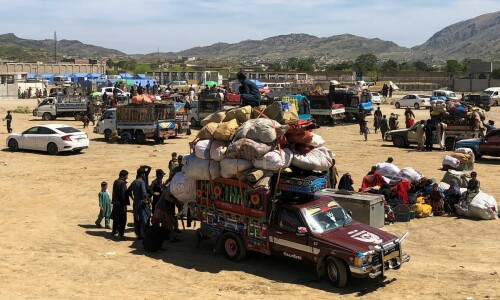
Islamabad – More than 100,000 Afghans have left Pakistan in the past three weeks, Pakistan’s Interior Ministry said Tuesday, as the country intensified its deportation campaign targeting undocumented foreigners.
The recent phase of expulsions, which began on March 31, focuses on holders of Afghan Citizen Cards—documents issued jointly by Pakistan and Afghanistan in 2017. This follows an earlier wave in 2023 that targeted undocumented Afghans with no identification.
Images from the Torkham and Chaman border crossings show long lines of Afghan families, many dragging their belongings back to a country facing deep economic and humanitarian challenges. The Interior Ministry confirmed 100,529 Afghans departed in April alone.
Some of those leaving were born in Pakistan and have never been to Afghanistan. “I was afraid the police would humiliate us,” said 27-year-old Allah Rahman at the Torkham border. “We’re leaving out of helplessness.”
Afghanistan’s Prime Minister Hasan Akhund condemned the deportations as “unilateral measures” and urged Pakistan to ensure the dignified return of refugees. The comments followed a visit by Pakistan’s Foreign Minister Ishaq Dar to Kabul.
The UNHCR reported a sharp rise in arrests and detentions of Afghans in Pakistan this month—12,948 in April alone, more than all of 2023.
Pakistan’s government justifies the deportations as necessary amid rising insecurity, blaming Afghan nationals for involvement in militant attacks—an accusation the Taliban denies.
Pakistan has hosted millions of Afghan refugees over the decades, including a new wave following the Taliban’s return to power in 2021. But economic hardship and growing security concerns have eroded public support for their continued stay.
“They came for refuge, but started businesses and took jobs,” said Tanveer Ahmad, a hairdresser in Islamabad. “Now Pakistanis are struggling.”
The UNHCR also warned that over half of those deported are children. Many women and girls face uncertain futures, returning to a country where they are barred from higher education and much of the workforce.
In this second phase of deportations, the government has revoked the residence rights of more than 800,000 Afghans, urging those awaiting relocation to other countries to leave by the end of April.
A local shopkeeper, speaking anonymously, reflected on the gap this would leave: “Afghans do the jobs Pakistanis avoid, like collecting garbage. Who will do that now?”