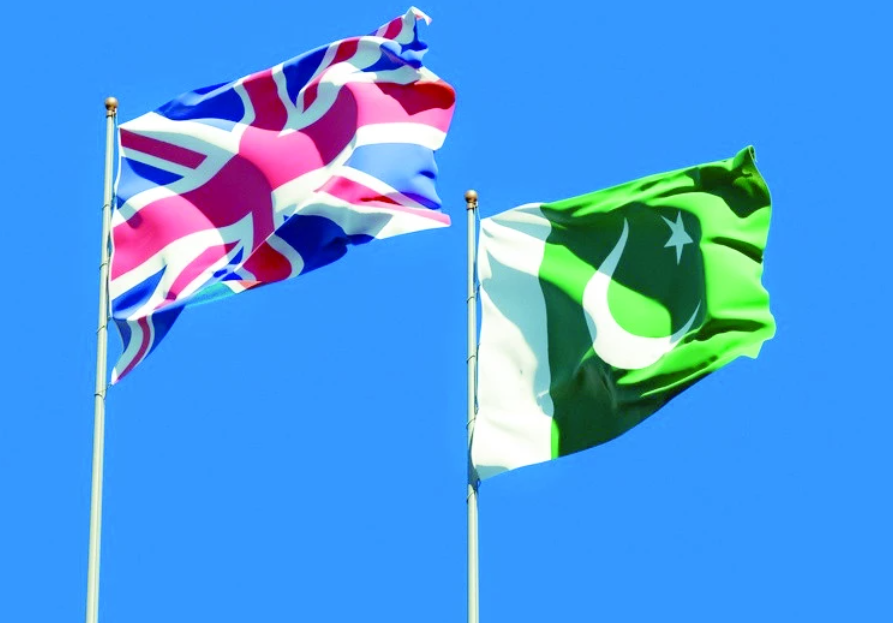

Enhanced British Economic Ties Offer New Avenues for Socio-Economic Development
Strengthening trade and business relations with the United Kingdom presents Pakistan with promising opportunities to pursue socio-economic development, industrial advancement, and increased exports. Pakistani entrepreneurs and investors residing in the UK can play a pivotal role in this process.
Expanding cooperation in areas such as healthcare, education, hospitality, culture, information technology, human resource development, textiles, fashion, and chemical industries promises mutual benefits for both nations.
To deepen this collaboration, a series of impactful reforms and initiatives could be implemented. These include establishing bilateral trade houses, negotiating a Preferential or Free Trade Agreement (PTA/FTA), organizing regular trade expos and cultural festivals, facilitating chamber-to-chamber delegations, enhancing information exchange, and forming a Pak-UK Industrial Knowledge Corridor.
British High Commissioner Jane Marriott’s commitment to strengthening the strategic partnership with Pakistan across key sectors—finance, education, engineering, healthcare, and energy—is a positive sign.
Dr. Mehmoodul Hassan Khan, Executive Director at the Centre for South Asia and International Studies in Islamabad, emphasized that Pakistan’s economy can benefit from British investments, digital technologies, AI, robotics, IT, supply chain management, SMEs, micro-financing, banking, disaster preparedness, and climate resilience.
He also suggested exploring untapped sectors such as marble, gemstones, halal food, organic cooking oils, handicrafts, and cultural products for further value addition.
Pakistani policymakers, business leaders, investors, and regional experts are encouraged to adopt a collaborative approach to bolster bilateral relations. Economic, trade, and commercial attachés based in the UK and EU, along with British-Pakistani politicians and policymakers, can significantly contribute to this effort.
The Pakistani diaspora—including workers, entrepreneurs, investors, and students—can play an instrumental role in achieving economic modernization. Potential areas of development include industrial productivity, trade diversification, clustered industrial zones, scientific research, affordable housing, interior design, climate-resilient construction materials, and collaborative projects in the metals and minerals sector.
Key demands from the business community include simplified visa processes, resumption of direct air links, and joint ventures in education, healthcare, tourism, and human resource development. These efforts, combined with continued soft-image diplomacy, multicultural exchange programs, and government-backed investment protections, would foster deeper engagement.
As a stable and sustainable economy, the UK can support Pakistan through expanded cooperation in green finance, climate technologies, organic fertilizers, green bonds, renewable energy (solar, wind, and hydrogen), peaceful nuclear energy, hybrid agriculture, fisheries, and halal food supply chains. Access to concessional green finance and community-based climate funding tools could further enhance bilateral economic ties.
Given the UK’s leadership in governance, democracy, climate justice, and multiculturalism, it can also assist Pakistan in areas like local governance, financial decentralization, women’s empowerment, poverty reduction, and job creation. With the end of USAID’s active presence, the UK is well-positioned to step in with its resources and expertise.
Recently, Finance Minister Senator Muhammad Aurangzeb, along with Khurram Schehzad (Advisor on Economic Reforms) and Muhammad Ali (Advisor on Privatisation), participated in the Jefferies’ ‘Pakistan Access Day’ conference in London. There, the finance minister reaffirmed Pakistan’s commitment to macroeconomic reform and structural transformation.
For FY2024, Pakistan’s exports to the UK reached approximately $2.01 billion, while imports stood at around $782 million. Major exports included textiles, used clothing, medical instruments, cotton products, cereals, leather goods, edible fruits, plastics, and confectionery. Imports from the UK consisted primarily of iron and steel, electrical equipment, mechanical appliances, vehicles, and various chemical products.