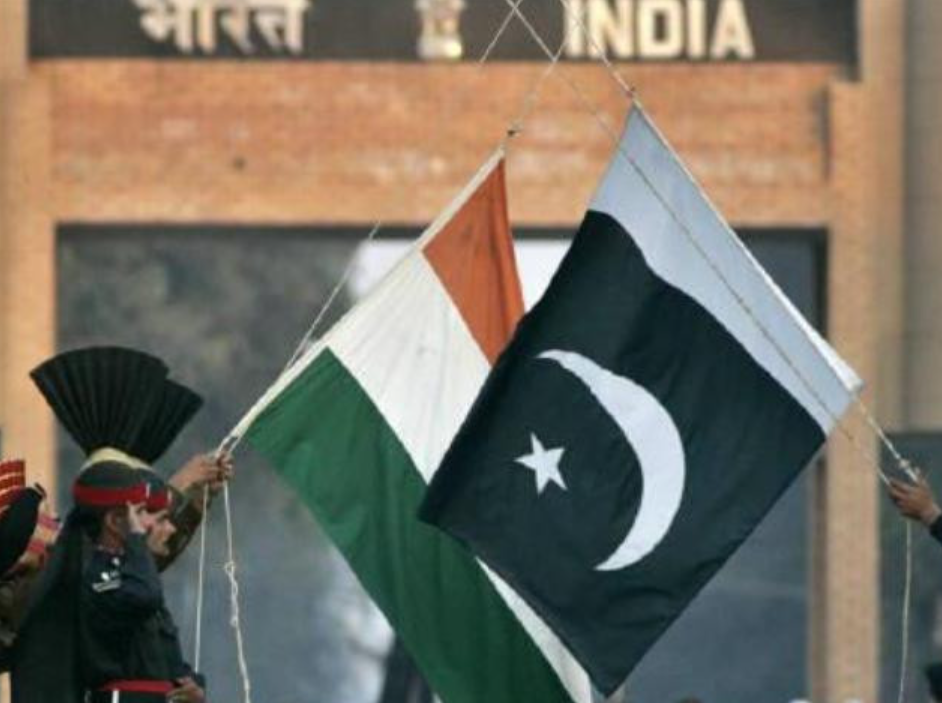
Both sides move to strengthen ceasefire
ISLAMABAD: Away from the heated rhetoric between Islamabad and New Delhi, the militaries of Pakistan and India have been quietly working to ease tensions. On Tuesday, they reached an agreement to pull back troops from forward positions.
This decision came during the latest contact between the Director Generals of Military Operations (DGMOs) from both countries. Neither side has officially announced this development.
A senior security source confirmed to The Express Tribune that both nations have agreed to consolidate the ceasefire.
As part of this agreement, the two sides will withdraw the troop reinforcements deployed during recent clashes and return to peacetime positions by the end of May, a senior Pakistani security official told AFP.
The official added that the withdrawal of additional troops and weaponry, primarily along the heavily militarized Line of Control (LoC), will take place in phases.
This follows last week’s statement by the Indian army that both sides had agreed to take “immediate measures to reduce troops along the borders and forward areas.”
“These steps were initially expected to be completed within 10 days, but minor issues caused delays,” the Pakistani official explained.
The source noted that both countries are proceeding cautiously, which explains the lack of frequent official statements.
The ceasefire, brokered by the US, was agreed upon on the evening of May 10, when tensions were near an all-out war.
For the first time since both became nuclear powers, Pakistan and India exchanged missile and drone strikes targeting each other’s military bases and installations. The conflict began after India launched missile strikes on the night of May 6-7, targeting what it claimed were terrorist camps—an accusation Pakistan strongly denied, providing evidence that civilians, including children as young as two years old, were killed.
In response, Pakistan shot down six Indian fighter jets, including advanced French-made Rafale jets. Three days later, Pakistan launched attacks on over two dozen military targets deep inside India, sending a clear message that no escalation would be tolerated.
The rapid escalation alarmed global capitals, prompting US intervention. After initial reluctance, the Trump administration successfully brokered the ceasefire.
Under the agreement, the US announced that Pakistan and India would begin talks on broader issues at a neutral venue. While Pakistan welcomed this, India remained silent on the proposal, insisting any talks focus solely on terrorism and the part of Kashmir under Pakistan’s control.
A source revealed that although military-level talks are progressing steadily, there is no clear timeline for the start of political-level negotiations.
Despite provocative statements from New Delhi, including claims by the Indian defense minister that Pakistan was “on probation” and that “Operation Sindoor” was merely paused, the Indian military has been sending more conciliatory signals.
Sources confirmed the Indian military’s interest in maintaining the ceasefire, while Pakistani officials reaffirmed their commitment to the truce. The Foreign Office spokesperson recently emphasized Pakistan’s preference for diplomacy over conflict and its pursuit of peaceful resolutions to all outstanding issues with India, including Jammu and Kashmir.
However, Shafqat Ali Khan warned that Pakistan’s pursuit of peace should not be mistaken for weakness.
Separately, in an interview with international media, DG ISPR Lt. Gen. Ahmed Sharif Chaudhry cautioned that Pakistan would respond decisively to any Indian misadventure and made it clear that Pakistan would never accept Indian domination.
(With input from AFP)