Islamabad calls on international community to address India’s aggressive posture and inflammatory narratives.
Pakistan has strongly condemned recent remarks by Indian Prime Minister Narendra Modi, characterizing them as “baseless, provocative, and irresponsible.” In a statement issued on Friday, the Foreign Office (FO) accused Modi of inflaming regional tensions for short-term political advantage.
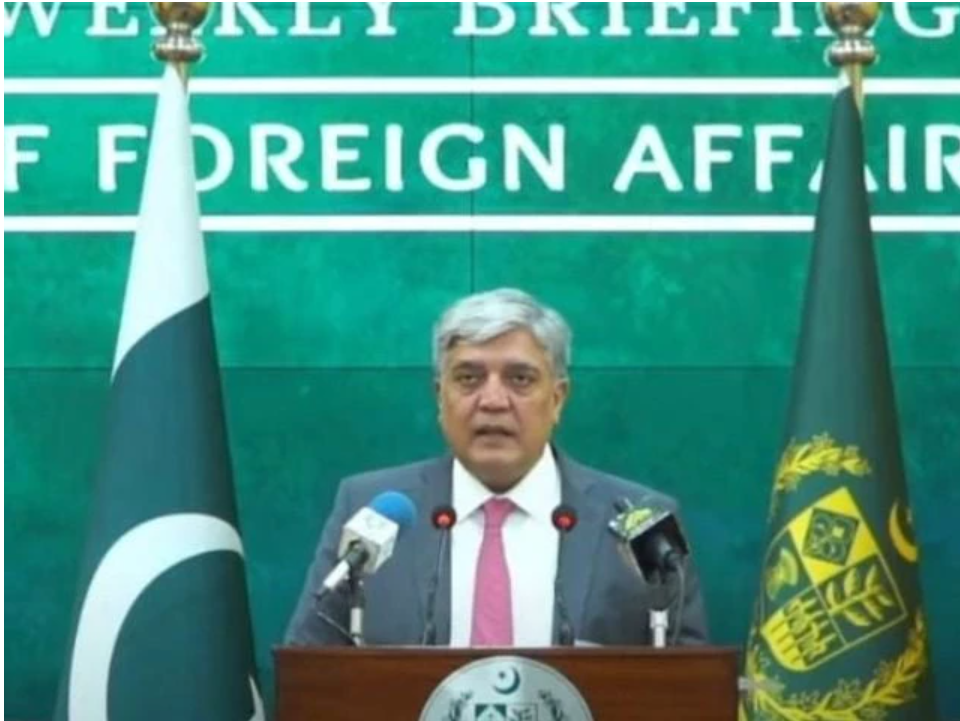
“These statements, riddled with distortions and inflammatory rhetoric, are a clear attempt to mislead the public and stir regional discord,” said FO spokesperson Shafqat Ali Khan. He warned that such remarks are not only reckless but also a violation of the principles enshrined in the United Nations Charter and international law.
The FO emphasized that invoking threats and boasting about military actions against a sovereign state undermines peace and stability across the region. “This dangerous rhetoric damages efforts to maintain regional harmony and international norms of responsible leadership,” Khan noted.
Rejecting any insinuation linking Pakistan to terrorism, the spokesperson stressed that the country remains a committed partner in the global fight against extremism. “Allegations attempting to associate Pakistan with acts of terrorism are not only factually incorrect but also an intentional misdirection aimed at concealing India’s internal challenges,” he said.
Khan also pointed to India’s ongoing human rights violations in Indian Illegally Occupied Jammu and Kashmir (IIOJK), stating that these are well-documented and widely recognized by the international community. He asserted that the plight of Kashmiris and their legitimate struggle for self-determination cannot be hidden behind India’s aggressive rhetoric.
Urging India to demonstrate restraint and responsibility, the FO called for disputes to be resolved through peaceful means and diplomacy rather than confrontation. “Warmongering for electoral gain is not only irresponsible but also dangerous,” the statement read.
While reaffirming Pakistan’s commitment to peace, the FO made clear that its restraint should not be mistaken for weakness. “Pakistan’s armed forces are fully capable and prepared to safeguard national sovereignty. Any act of aggression will receive a firm and proportionate response,” Khan warned, referencing past demonstrations of resolve.
The statement also touched on the growing tensions over water rights, particularly the Indus Waters Treaty of 1960, brokered by the World Bank. Though Pakistan’s finance ministry has indicated that its suspension poses no immediate threat, the FO expressed concern about rising insecurity around water resources.
Tensions escalated further following an April 22 attack that killed 26 people, primarily Hindu pilgrims, for which India blamed Pakistan without publicly providing evidence. Islamabad has denied any involvement.
India’s retaliatory missile strikes led to the most intense military exchanges between the two nuclear-armed neighbors in years, culminating in a ceasefire agreement on May 10.
In conclusion, Pakistan urged the global community to seriously consider the ramifications of India’s escalating hostility and rhetoric. “The glorification of conflict serves no one,” the FO stated. “Lasting peace can only be achieved through dialogue, mutual respect, and adherence to international law.”