
ISLAMABAD/LAHORE, June 8, 2025 — Pakistan’s agricultural sector is facing a perfect storm of economic hardship, food insecurity, and policy inaction, warn leading industry stakeholders, as a combination of poor crop yields, market imbalances, and substandard supply chain practices threaten national food security and the livelihoods of millions.
In separate but overlapping appeals to the federal government, both the Pakistan Kissan Ittehad (PKI) and the Pakistan Polypropylene Woven Sack Manufacturers Association (PPWSMA) have raised urgent red flags over deep-rooted systemic issues affecting the country’s most vital sector.
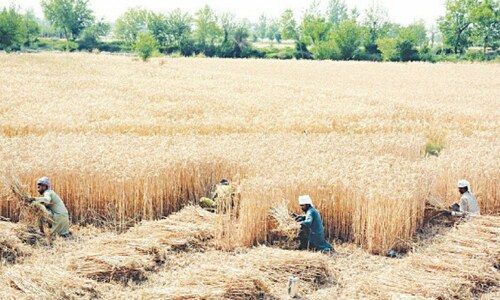
According to the PKI, wheat farmers alone have incurred an unprecedented Rs2,200 billion in losses from May 2024 to May 2025. This accounts for over 23% of the crop sector’s GDP contribution for FY2024. The fallout has been widespread, hampering investment in other key crops such as cotton, maize, and sugarcane.
“Pakistan’s agriculture is teetering on the brink,” said PKI President Khalid Mahmood Khokhar. “This is no longer just a farming issue — it is a national emergency. If the government fails to act now, we risk an irreversible collapse of our food system.”
Cotton production has dropped by 50% against target, forcing the country to increase cotton imports to $1.9 billion, up from $448 million last year. Wheat output has also declined to 28.98 million tonnes, 8.91% lower than last year’s yield. Maize and sugarcane outputs are down 15.4% and 3.89% respectively. Collectively, the output of major crops has fallen by 13.49% in FY2025, driving agricultural growth down from 6.25% to just 0.56% since July 2024.
The deteriorating trade balance reflects this crisis. While food exports slightly dipped to $6.16 billion in July–April FY2025, food imports surged to nearly $7 billion, worsening the pressure on Pakistan’s fragile foreign exchange reserves.
Adding to farmers’ woes is a tax regime that disproportionately penalizes local producers. Imported cotton bales face zero GST, while domestically produced seed cotton is burdened with an 18% tax. Similarly, GST rates of 14% and 18% on tractors and their implements respectively have further squeezed margins.
PKI has demanded an immediate overhaul of agricultural taxation, abolition of GST on domestic cotton and agricultural equipment, and the standardization of electricity tariffs at Rs10 per unit. They also called for the announcement of support prices for all major crops and a transparent commodity pricing mechanism to ensure at least a 25% return on investment for growers.
Meanwhile, PPWSMA has spotlighted another critical but often overlooked issue — the continued use of substandard and non-food-grade sacks for wheat flour packaging. In a letter to the Ministry of National Food Security and Research, the association warned that poor packaging has led to an estimated Rs594 billion in losses over the past seven years due to wheat flour wastage and contamination.
“Every year, countless sacks break or degrade due to low-quality materials, causing wheat flour to spill and become unusable during storage and transportation,” said Iskandar Khan, Chairman of PPWSMA. He emphasized that the difference in cost between high-quality certified polypropylene sacks and ordinary ones is minimal — Rs9 for a 20 kg bag and Rs7 for a 10 kg bag — yet the quality difference is enormous.
PPWSMA called for the strict enforcement of SRO 46(I)/2017, which mandates the use of certified food-grade polypropylene sacks nationwide. The association stressed that ensuring proper packaging is not just an economic concern but a critical public health and food security issue.
With 11 million Pakistanis already facing acute food insecurity, as highlighted in a recent FAO report, stakeholders agree that decisive action is needed now more than ever.
Both PPWSMA and PKI have urged the federal government to adopt urgent reforms in the upcoming budget to stabilize the sector. These include quality enforcement measures, targeted subsidies, tax relief, and improved market mechanisms.
“The future of our agriculture — and the nation’s food security — depends on bold, immediate action,” said Khokhar. “These measures are not optional; they are essential for the survival of our farmers and the well-being of every Pakistani.”