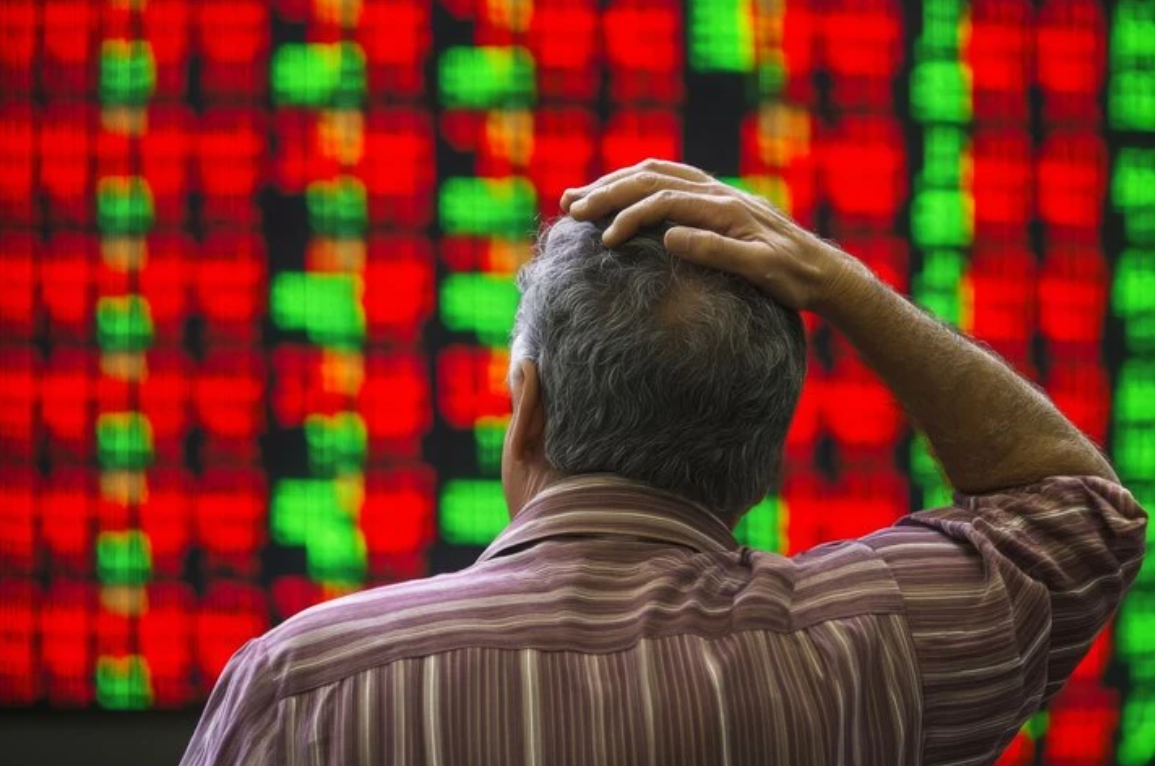

The Pakistan Stock Exchange (PSX) experienced a sharp downturn this week, with the benchmark KSE-100 index plunging by 6,939 points, or 6.08% week-on-week, to close at 107,175. The decline came amid rising geopolitical tensions between Pakistan and India, overshadowing a 100 basis point policy rate cut by the State Bank of Pakistan (SBP) and a late-week market rebound.
Despite a strong recovery rally on Friday, market sentiment remained bearish overall. The SBP’s decision to reduce the policy rate to 11% led to a decline in Karachi Interbank Offered Rate (Kibor) and secondary market yields, but failed to counterbalance broader investor concerns driven by escalating regional hostilities.
Macroeconomic indicators offered mixed signals. Remittances rose 13% year-on-year in April to $3.2 billion, while SBP reserves increased by $118 million week-on-week. The government also launched its Green Sukuk initiative, aiming to raise Rs20–30 billion for environmentally sustainable projects. However, fiscal pressure continued to mount, with the finance ministry reporting a budget deficit of Rs2,970 billion (2.4% of GDP) for the first nine months of FY25, and trade imbalances remained unresolved.
The week started on a volatile note as uncertainty surrounding the SBP’s policy move and cross-border tensions kept investors on edge. Monday saw the index close nearly flat after an early 1,036-point plunge. By Tuesday, the market slipped further—falling 534 points—despite the central bank’s rate cut, as anxiety grew over India-Pakistan tensions and Moody’s issued a cautionary note on Pakistan’s economic outlook.
Wednesday marked the most dramatic session of the week. The index plummeted over 6,500 points shortly after the opening bell amid heightened border skirmishes, briefly dipping to a low of 107,008 before partially recovering. Nonetheless, the day ended with a massive 3,500-point loss.
The sell-off deepened on Thursday, with the PSX recording its largest single-day drop in history—6,482 points—amid escalating war fears. Reports of Indian drone strikes on major Pakistani cities further rattled investor confidence, dragging the index down to 103,527.
However, markets bounced back strongly on Friday, as optimism returned on the back of anticipated IMF disbursements, including the Extended Fund Facility (EFF) tranche and a $1.3 billion Resilience and Sustainability Facility (RSF). The KSE-100 surged nearly 3,650 points by close.
In its weekly review, Arif Habib Limited (AHL) noted that persistent geopolitical anxieties and economic concerns kept the market under pressure throughout the week. Despite the SBP’s dovish stance, monetary easing was overshadowed by political uncertainty.
Sector-wise, banks led the decline with a 1,637-point negative contribution, followed by exploration and production (905 points), cement (738 points), technology (508 points), and pharmaceuticals (436 points). Sugar was the only sector with a marginally positive contribution, adding just 7 points.
Among individual stocks, major laggards included UBL (-617 points), Lucky Cement (-435), Hubco (-339), OGDC (-338), and Mari Petroleum (-321). In contrast, Nestle (+16), JDW Sugar (+7), and IBFL (+3) provided modest support.
Foreign investors turned net buyers this week, with inflows of $1.52 million, reversing last week’s net outflows of $6.79 million. Average daily trading volumes rose 20% week-on-week to 508 million shares, while average daily traded value inched up to $98 million.
JS Global analyst Muhammad Waqas Ghani attributed the market’s volatility to increasing geopolitical risk, especially following unconfirmed reports of Indian drone activity over major Pakistani cities, which severely undermined investor confidence.