

By: S.M.A. Kazmi
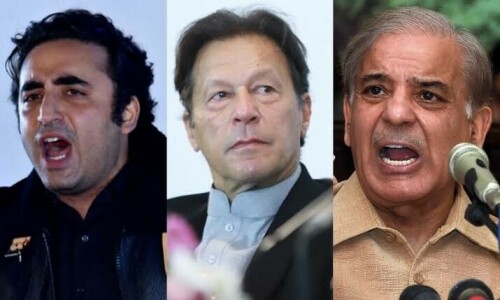
By now, the phrase “new normal” is being tossed around almost casually in Pakistani political discourse. But for the PTI, it seems less a new normal and more a persistent identity crisis. Even as its influence wanes and its leader remains behind bars, the party continues to waver between confrontation and compromise. It’s as though the PTI is trying to walk two roads at once—demanding talks on one hand, while stubbornly clinging to a resistance narrative on the other.
The party argues that national interest demands the state re-engage with it. But what exactly is PTI offering in return? What’s the middle ground it’s willing to occupy? That remains frustratingly vague. Worse still, it seems to expect the entire political playing field to be redrawn as a duel between PTI and everyone else, sidelining the legitimacy of all other political actors. This zero-sum mindset is not just untenable—it’s dangerous.
Imran Khan’s role in all this is particularly confounding. Publicly, he floats hints about openness to dialogue; privately—or rather semi-privately, through “leaked” statements to confidantes—he undermines those very conversations. This inconsistency isn’t just a strategic flaw; it’s deeply demoralizing for PTI’s own negotiators and confuses its support base. The party’s lack of clarity has allowed the ruling regime to dig in, reinforce its position, and manipulate the political machinery in its favor.
And yet, PTI keeps missing the memo: the resistance playbook has reached its limits. Whatever moral high ground it claims is steadily eroding under the weight of its own indecision. Meanwhile, the government—despite its questionable popularity—has managed to pass legislation that solidifies its grip on power. The space for a democratic reset is shrinking by the day, and it’s the public that’s paying the price.
At what point does PTI acknowledge that its strategy isn’t working? Yes, the government’s legitimacy may be disputed. Yes, there’s widespread disillusionment. But clinging to outrage without offering a roadmap is no substitute for political vision. Pakistan desperately needs a ceasefire—political, not rhetorical. We need a return to basic normalcy: functioning institutions, civil dialogue, and rules of the game that are respected by all players.
If this spiral continues, the biggest casualty won’t just be PTI’s relevance—it’ll be Pakistani democracy itself. The more politics becomes a game dictated by non-political actors, the harder it will be for any party to function autonomously. It’s not just PTI that loses in this chaos—every political actor risks being reduced to a powerless pawn.
The way forward? It’s not glamorous, but it’s necessary: mutual respect, a willingness to concede, and a commitment to principled dialogue. Only then can Pakistan escape the cycle of power plays and start building a sustainable democratic future. Until then, the “new normal” will remain nothing more than prolonged instability with a rotating cast of losers.