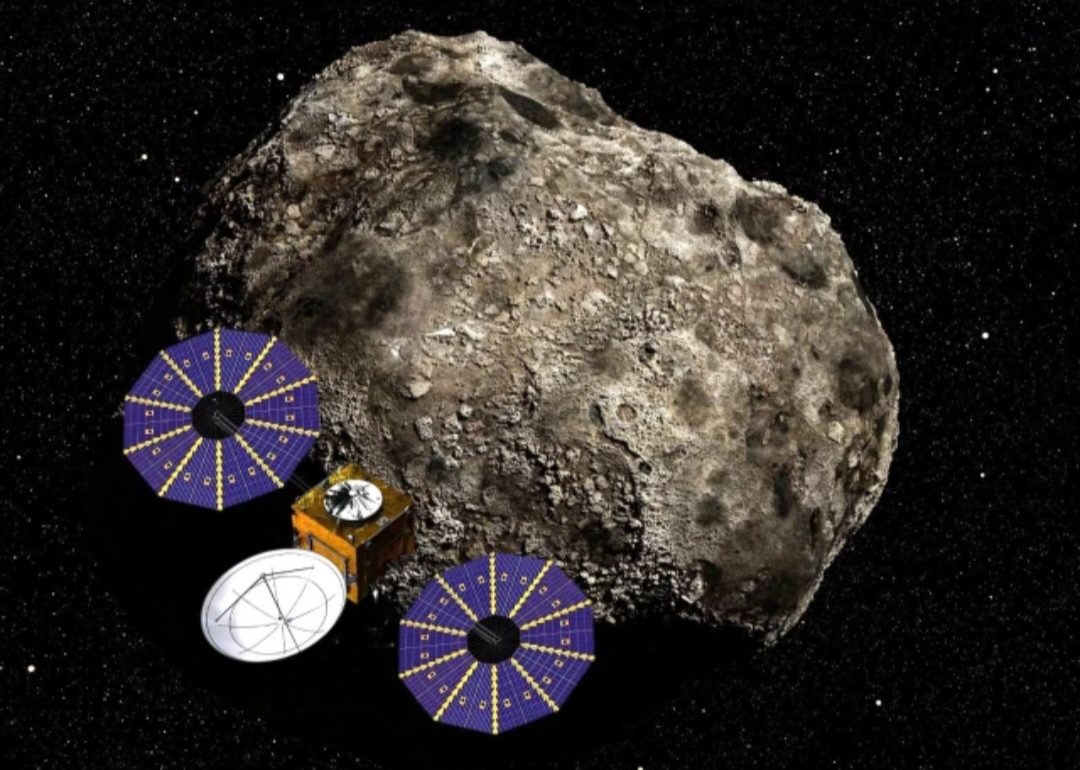

China has successfully launched its Tianwen-2 spacecraft, marking the country’s first mission to retrieve samples from a near-Earth asteroid. The launch took place in the early hours of Thursday morning, propelling China into the elite club of nations capable of bringing back asteroid samples — a feat previously achieved only by Japan and the United States.
The Tianwen-2 mission is a key milestone in China’s fast-evolving space program, following on the heels of lunar landings and a continuously crewed space station. The mission aims to reach asteroid 469219 Kamoʻoalewa by July 2026 and return with precious rock samples by November 2027. If successful, this mission would represent a decade-long effort to advance China’s planetary science and engineering prowess.
The launch, carried out via the Long March 3B rocket from the Xichang Satellite Launch Center, was confirmed as a “complete success” by China’s state news agency, Xinhua.
Following its sample return from Kamoʻoalewa, Tianwen-2 will embark on an extended mission to the comet 311P/PanSTARRS, which orbits within the main asteroid belt between Mars and Jupiter. Unlike typical icy comets, 311P lacks the surface ice that forms a comet’s tail, offering a unique scientific opportunity.
This mission isn’t without challenges. Landing and sampling on Kamoʻoalewa’s low-gravity surface is far trickier than China’s previous lunar missions. Yet, the Tianwen-2 team seems prepared, leveraging lessons from Japan’s Hayabusa missions and NASA’s OSIRIS-REx mission, which brought back samples from the asteroids Itokawa, Ryugu, and Bennu.
Kamoʻoalewa itself is an intriguing target — a quasi-satellite of Earth that has been orbiting the sun near our planet for about a century. It’s estimated to be between 40 and 100 meters in size.
China’s efforts in planetary exploration are rapidly expanding. Following the success of the Tianwen-1 mission to Mars in 2021, which landed on the expansive Utopia Planitia, China is already eyeing an ambitious Tianwen-3 mission to retrieve samples from Mars in 2028. In a recent announcement, China’s National Space Administration (CNSA) revealed it would offer 20 kg of payload space for foreign research projects onboard the Tianwen-3 orbiter and lander.
Tianwen-2 underscores China’s determination to carve out a leading role in interplanetary exploration, setting the stage for future missions that may one day include crewed lunar bases and Martian exploration.