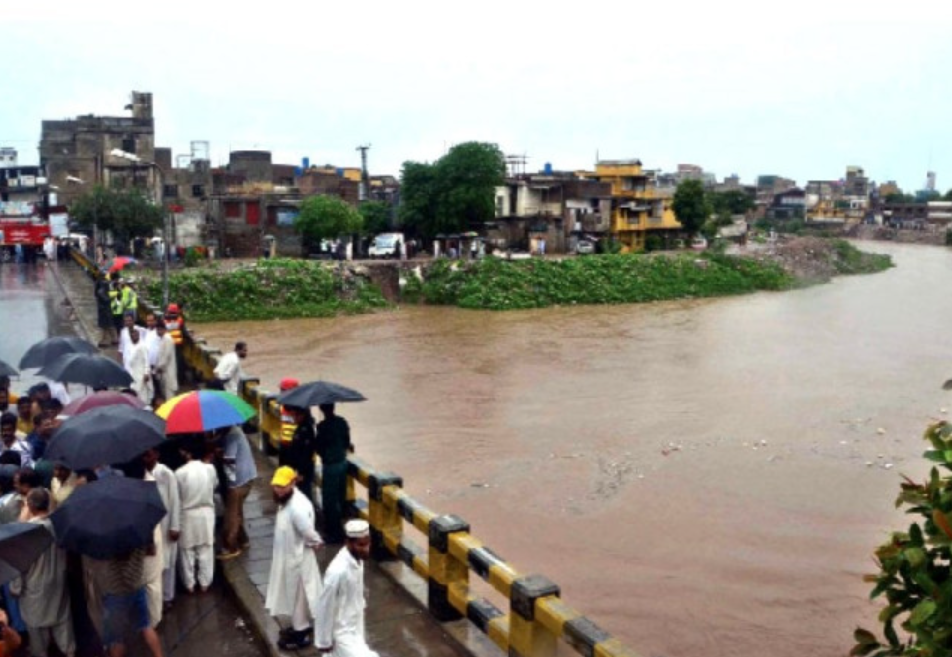

In Rawalpindi, the Gawalmandi Bridge has unofficially transformed into a symbolic stage for flood assessment — not for its strategic significance in crisis response, but as a preferred “photo-op point” for public officials.
As the city grapples with yet another bout of urban flooding, particularly in its low-lying Cantonment areas, the stark contrast between action and appearance has drawn sharp criticism. On Wednesday, while nearly 70% of Rawalpindi’s commercial hubs — including Raja Bazaar and Moti Bazaar — were submerged under 2 to 3 feet of water, senior officials were noticeably absent from ground-zero locations.
Instead, the commissioner, deputy commissioner, WASA MD, RDA director general, and others descended on the Gawalmandi Bridge after the rain had subsided. There, they took a few photos, issued routine statements, and departed — all without engaging with the flood-stricken communities.
The bridge, freshly painted and cleaned before every VIP visit, has come to symbolize official disconnect. While other, more flood-prone bridges along the Nullah Leh are deliberately avoided due to fears of public outrage, Gawalmandi remains the go-to venue — secure, elevated, and conveniently free of public scrutiny thanks to halted traffic during such staged inspections.
Sources say this trend is set to continue, with all future ministerial and departmental flood visits expected to converge at this same location. Even a potential visit by Punjab Chief Minister Maryam Nawaz, according to insiders, would likely be confined to this sanitized vantage point.
Civic groups aren’t buying it. The Citizen Action Committee and District Bar Association have condemned the performative approach. Malik Zaheer Awan, chairman of the Committee, has called for actual field visits and immediate financial relief of Rs100,000 for each affected family. District Bar President Sardar Manzar Bashir labeled the bridge visits “grossly inadequate” for any serious assessment of damage.
Frustration is mounting — and not quietly. The Citizen Action Committee has warned of mass protests if what they call the “selfie drama” does not come to an end. For now, Gawalmandi Bridge stands not as a beacon of disaster response, but as a troubling symbol of political optics overtaking public service.