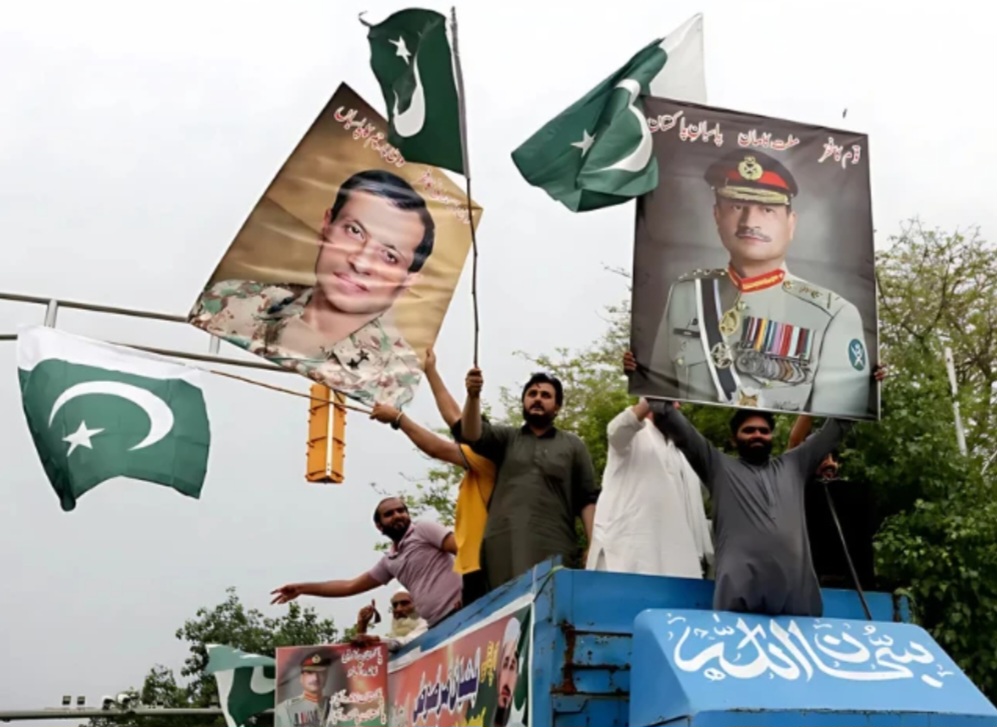

The escalation of tensions between India and Pakistan in May 2025 revealed a parallel crisis unfolding in the media landscape, where the rapid spread of misinformation became a central issue. What distinguished this wave of disinformation was not just its volume or speed, but the direct involvement of major Indian news outlets, which amplified falsehoods and fueled confusion at a time when clarity was most needed.Far from being isolated to fringe sources or anonymous social media accounts, some of the most egregious false claims were broadcast by prominent national television channels and printed in leading newspapers. These included fabricated reports of military invasions, high-level arrests, and city-wide destruction—none of which were verified or supported by credible evidence. Some visuals used to accompany these stories were traced back to unrelated global conflicts or even video game footage, severely misleading viewers.The tendency of the media to align with dominant political narratives added another layer of concern. In the rush for viewership and under perceived political influence, newsrooms appeared to prioritize sensationalism over journalistic integrity. This trend, often criticized by media analysts, contributed to the blurring of lines between state propaganda and independent reporting.One striking example occurred when a state-owned broadcaster announced a military coup in Pakistan on live television—claims that were later proven entirely false but had already spread across platforms and headlines. Such reporting not only compromised factual accuracy but also heightened diplomatic risk during an already delicate moment.Social media further amplified the problem. Dozens of false posts circulated widely in the early hours of the conflict, often outpacing attempts to fact-check or correct the record. Many users, in search of clarity, turned to AI chatbots for verification—tools that, while helpful in some contexts, also produced inconsistent or inaccurate responses, compounding public confusion.In the vacuum left by official silence, national media channels filled the space with unchecked, hypernationalistic rhetoric. The absence of timely statements from government leaders allowed false narratives to take root, unchecked by authoritative clarification.Compounding the issue were actions taken to suppress alternative sources of information. Access to foreign news outlets was restricted, and social media accounts linked to independent reporting were suspended. Journalists faced detentions for their online activity, further narrowing the space for critical or corrective coverage.This episode underscores a broader issue of media responsibility in times of conflict. The unchecked spread of misinformation, amplified by both mainstream platforms and digital tools, not only misinformed the public but risked inflaming a sensitive geopolitical situation. It stands as a stark reminder of the need for rigorous editorial standards, government transparency, and protections for independent journalism in times of crisis.