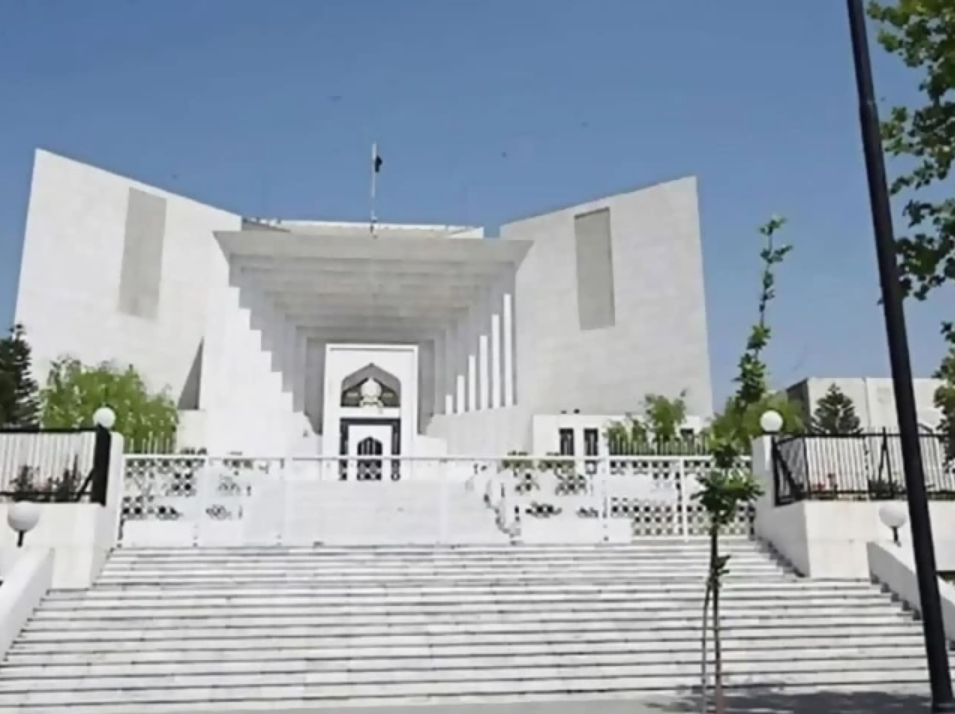

In a significant ruling, the Supreme Court of Pakistan has reaffirmed the central role of proportionality in evaluating administrative and disciplinary actions, particularly those that impact fundamental rights and human dignity. The judgment, authored by Justice Syed Mansoor Ali Shah, offers a nuanced and structured approach to judicial review, advocating for fairness, legality, and sensitivity to context.
The case in question involved a sub-inspector who challenged a disciplinary penalty before the Punjab Service Tribunal. While the tribunal acknowledged that no evidence supported the misconduct allegations, it merely reduced the penalty rather than fully exonerating the officer. This inconsistency became the focal point of the Supreme Court’s critique.
Justice Shah’s four-page opinion lays out a four-part proportionality test now formally adopted by the Court:
- The measure must pursue a legitimate aim;
- It must be suitable for achieving that aim;
- It must be necessary—meaning no less restrictive alternative is available;
- It must strike a fair balance between the measure’s impact on individual rights and the broader public interest.
The ruling clarifies that any intrusion on rights must meet this rigorous standard to be deemed justifiable and lawful. It also signals that tribunals and administrative bodies must exercise their discretion in alignment with legal principles and evidentiary records.
In this instance, the Supreme Court found that the Tribunal’s partial penalty reduction was both legally and logically flawed, given the complete lack of evidence. The Court noted that once misconduct was unproven, the only lawful course was full exoneration—not a mitigated punishment.
This decision is more than just a resolution of an individual grievance; it reinforces the judiciary’s commitment to principled governance and procedural fairness. It also marks a broader institutional shift towards more structured constitutional adjudication, with proportionality serving as a vital tool for ensuring justice is both rational and humane.
In sum, the ruling underscores that while administrative authorities do possess discretion, it must be exercised responsibly—anchored in legality, fairness, and the fundamental rights of individuals.