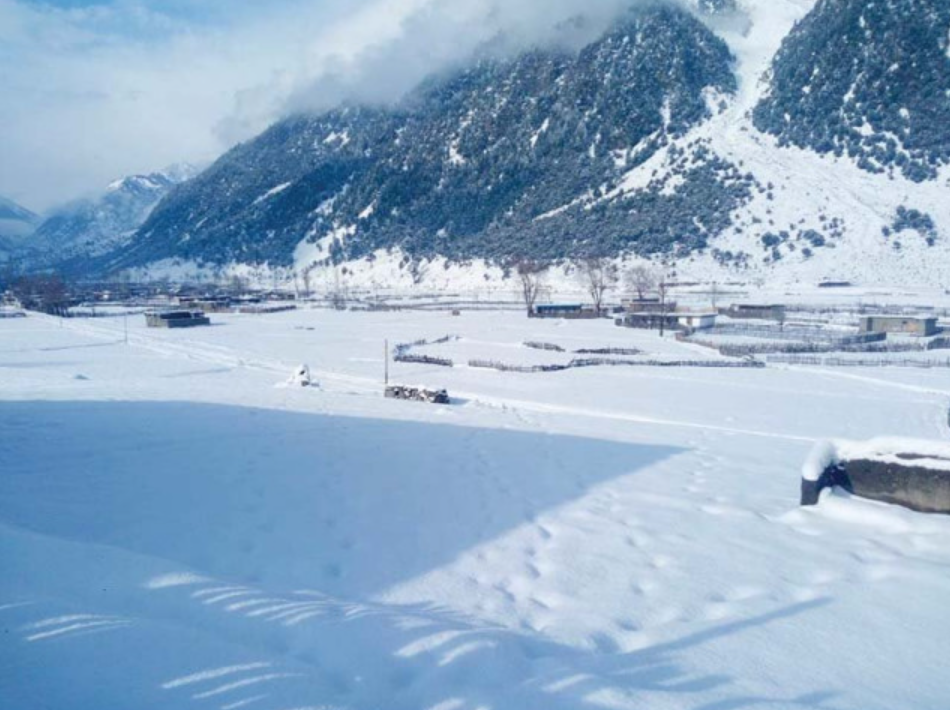

The accelerated retreat of glaciers in northern Pakistan is sounding the alarm on a looming ecological and humanitarian crisis. Once stable and life-sustaining, these icy giants are now melting at an unprecedented pace—triggered by global warming and erratic rainfall patterns.
In remote mountain villages, the impact is both immediate and personal. Homes are being threatened by rising river levels, and communities are scrambling to protect themselves with makeshift barriers as floodwaters surge. Traditional irrigation systems, once reliably fed by glacier melt, are now faltering under shifting water patterns. Streams that once flowed steadily are either drying up or flooding with destructive force.
Local residents observe that the glaciers, once visibly closer, are receding each year. Their disappearance has thrown seasonal rhythms into disarray, making agriculture—especially the cultivation of wheat, barley, and fruit—an increasingly uncertain venture. Farmers now find themselves relying more on rain, which is inconsistent and often inadequate. Droughts and sudden floods are wiping out entire harvests, jeopardizing food security and rural livelihoods.
Experts warn that the issue extends far beyond isolated communities. The glaciers of northern Pakistan, including some of the largest outside the polar regions, feed vital river systems such as the Swat, Panjkora, Kabul, and Indus. These rivers support agriculture, drinking water, and biodiversity for millions downstream.
With over 7,000 glaciers, Pakistan is a critical water tower for the region. Yet, climate change is destabilizing this natural reservoir. Studies indicate that the Himalayan region is warming faster than the global average, with some glaciers thinning by up to five meters annually. This rapid loss not only threatens water availability but also intensifies the risk of floods, landslides, and long-term ecological imbalance.
Environmental experts are increasingly pointing to a dangerous convergence of factors: global temperature rise, deforestation, encroachment, and unsustainable development. Together, they are amplifying the destructive power of rivers and undermining both human and environmental resilience.
The message is clear: unless urgent measures are taken to address glacier loss and climate adaptation, Pakistan faces a future marked by water scarcity, disrupted agriculture, and heightened disaster vulnerability.