
Overview
Samarium, a rare earth element with unique magnetic and nuclear properties, has become a critical concern for the United States due to its essential role in military technology and the country’s reliance on China for supply. As Beijing tightens its grip on rare earth exports, the U.S. faces mounting pressure to secure independent access to this strategic resource.
What is Samarium?
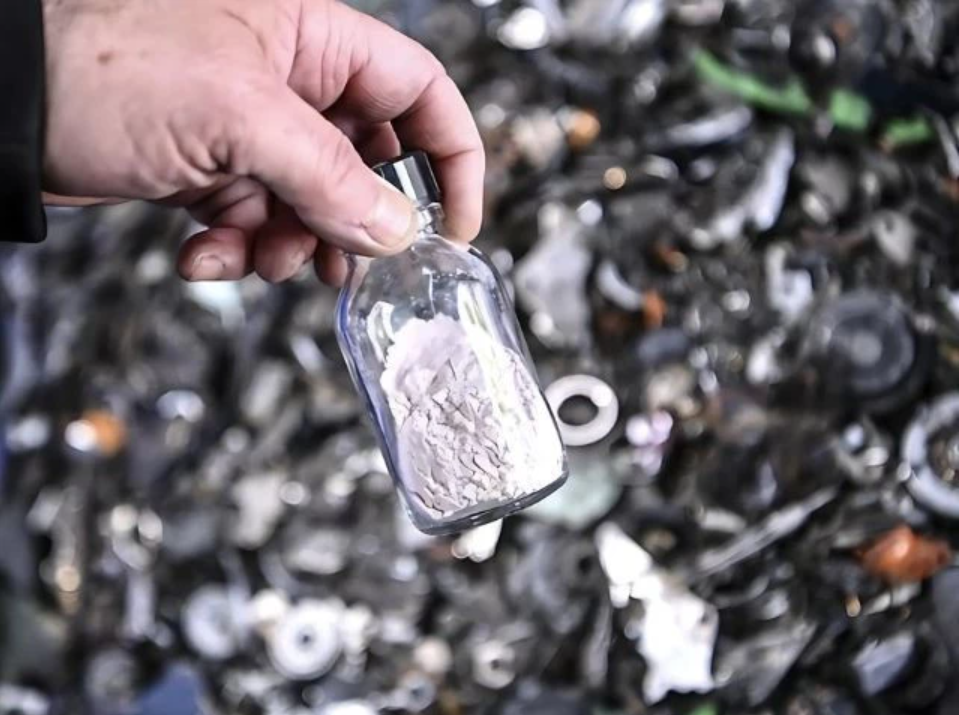
Samarium is a silvery, magnetic metal in the lanthanide group, known for its heat resistance, high coercivity, and ferromagnetic properties. It is a key material in samarium-cobalt (SmCo) magnets, prized in aerospace and defense applications. It also finds use in nuclear reactors (as a neutron absorber), lasers, electric motors, and medical imaging.
While civilian uses exist, the element’s true value lies in its military relevance—used in jet engines, missile systems, and particularly in the F-35 fighter jet, which requires around 50 pounds of samarium-cobalt magnets per unit.
U.S. Concerns and Supply Risks
The United States is completely dependent on China for samarium. This dependency was spotlighted after China, citing national security, introduced new export restrictions in April 2024 on seven rare earth elements used in military-grade magnets, including samarium.
U.S. officials have described this as a strategic vulnerability. While American law mandates domestic or allied production of military-grade magnets, raw materials like samarium can still be sourced globally, creating a security loophole.
Production Bottlenecks and Economic Hurdles
The challenge isn’t just mining the element—it’s refining it. Processing samarium involves complex and environmentally taxing methods. Despite known reserves in the U.S. and Australia, nearly all refining infrastructure is in China.
Past efforts to revive domestic production have struggled. The Mountain Pass mine in California reopened in 2014 but soon shut due to Chinese competition. MP Materials, its current operator, received Pentagon support to build out processing capacity, but market limitations for samarium hinder progress.
A separate U.S.-Australia joint project with Lynas Rare Earths was abandoned after Lynas prioritized operations in Malaysia.
Geopolitical Context
Ongoing global tensions—U.S. arms shipments to Ukraine and Israel, and rising friction over Taiwan—are accelerating demand for high-end military technology. Meanwhile, diplomatic efforts to ease China’s export controls have produced little hope for change.
This dependency on a strategic rival for a military-critical material is viewed by many U.S. policymakers and defense experts as unacceptable.
Strategic Implications
Experts like Dr. Elaine Kim and former State Department officials argue that rare earth access is no longer just an economic or trade issue—it’s a matter of national security. The shift from WTO mechanisms to direct strategic competition underscores this new reality.
As global power balances shift, samarium has become more than a rare metal—it’s now at the heart of a technological and military contest that may define future geopolitical alignments.