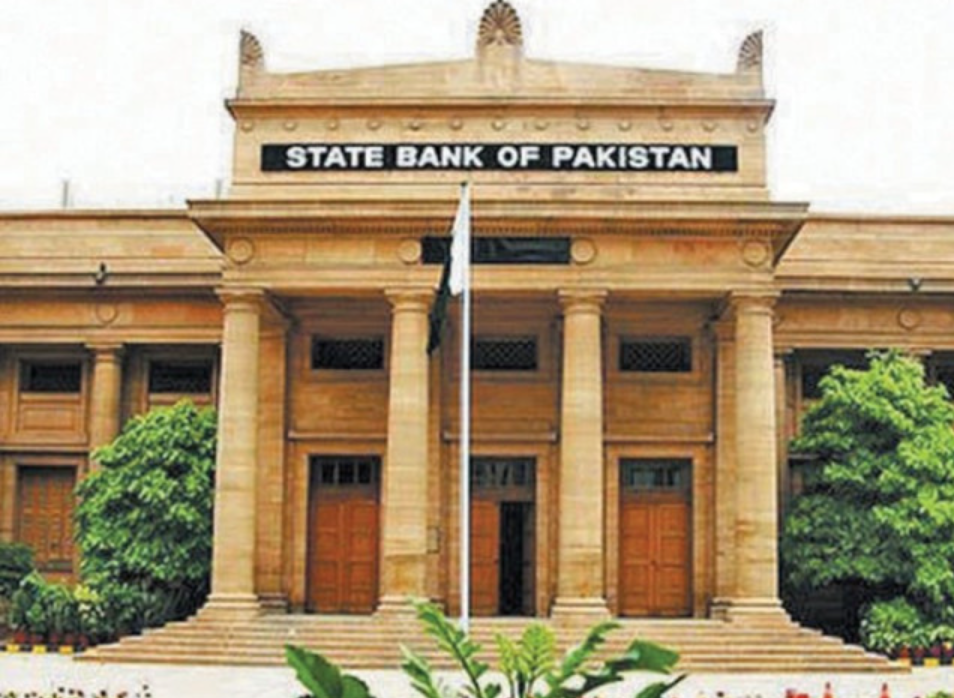

The State Bank of Pakistan (SBP) has maintained its benchmark interest rate at 11% in its latest monetary policy announcement, citing signs of economic recovery and stabilising inflation. The central bank emphasized that the current rate is aligned with its goal of keeping inflation within the 5–7% target range for FY2026.
Inflation in May rose by 3.5%, but SBP expects it to remain under control moving forward. While the trade deficit continues to grow, the current account remained largely balanced in April 2025, and the overall surplus over the last 10 months stands at $1.9 billion. Foreign exchange reserves have also risen to $11.7 billion, the bank reported.
Real GDP growth for FY2024 is estimated at 2.7%, with a more ambitious 4.2% growth target set for FY2025. Improved performance in industry and services helped push second-half GDP growth to 3.9%, though the agriculture sector lagged due to weak crop yields.
However, the SBP cautioned that proposed fiscal measures in the federal budget could widen the trade deficit. Despite these risks, the bank anticipates continued economic momentum driven by industrial and services sector growth, with minimal inflationary pressure expected from the new budget.
The decision to hold the interest rate was widely anticipated by economists and analysts. A recent Reuters poll revealed that 11 out of 14 respondents expected the rate to remain unchanged. Analysts who previously predicted a rate cut revised their expectations following Israel’s surprise military strikes on Iran, which triggered a surge in global oil prices—raising inflation concerns for oil-importing countries like Pakistan.
The geopolitical tensions and potential global commodity price hikes were cited as key reasons for the central bank’s cautious stance.
Meanwhile, the International Monetary Fund (IMF) has expressed concerns over the federal government’s unapproved disbursement of Rs344 billion in grants. According to sources, the IMF flagged these expenditures—made without National Assembly approval—as a breach of the ongoing agreement between Pakistan and the Fund.
The controversial grants include Rs115 billion to Independent Power Producers (IPPs), Rs30 billion for Sindh flood victims, Rs6 billion to the Federal Board of Revenue (FBR), Rs14 billion for solarization projects, and Rs23 billion for anti-terrorism operations. Additional allocations include Rs3.7 billion for the Reko Diq project, Rs520 million for the Special Investment Facilitation Council (SIFC), and Rs7 billion for parliamentarians’ development schemes.
The IMF’s reservations could complicate future negotiations, particularly as Pakistan seeks to maintain fiscal discipline and ensure compliance with bailout terms.