ISLAMABAD:
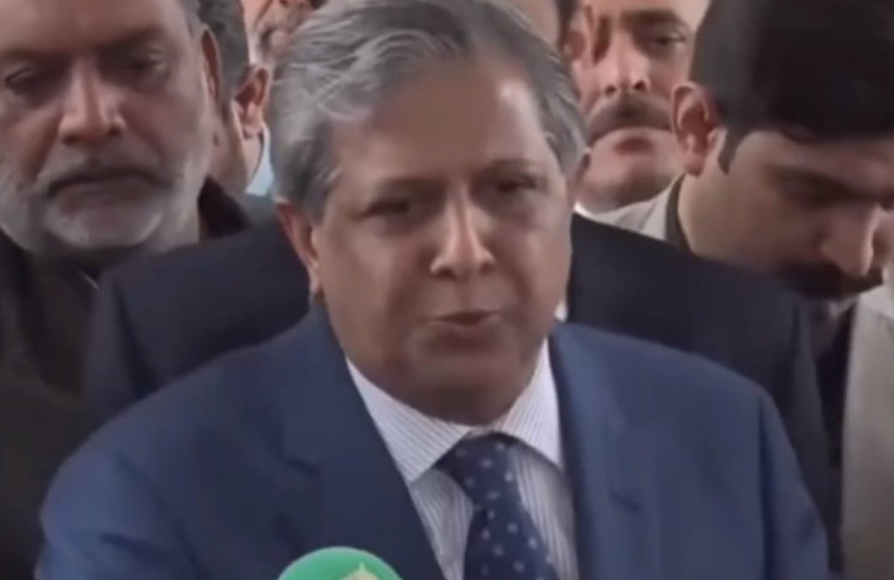
Law Minister Azam Nazir Tarar has advised newly appointed appellate tribunal members handling multi-billion-rupee tax disputes to step aside from any cases where conflicts of interest might arise from their previous professional affiliations.
Speaking to The Express Tribune following concerns about potential conflicts of interest among the tribunal members, Tarar said, “Whenever there is a question of conflict of interest, the new members should opt for the ‘not before me’ route.”
Earlier this year, instead of using the Federal Public Service Commission (FPSC) for these appointments, the government formed a three-member selection committee comprising Justice (Retired) Mushir Alam, FPSC member Major General (Retired) Naveed Ahmad, and AF Ferguson senior partner Asim Zulfiqar. On the committee’s recommendation, the federal cabinet has appointed 15 new members from March to May.
While these members enjoy salaries equivalent to judges, they lack the same independence, noted Dr Ikramul Haq, a senior Supreme Court lawyer. He also questioned the competence of some appointees and suggested that tribunal members should ideally operate under the high courts or Supreme Court, rather than the executive branch.
In response to concerns about bypassing the FPSC, Tarar explained that the selection process was outsourced to management consulting firm AT Kearney to ensure greater independence. He further emphasized that tribunal members are mature professionals expected to manage conflicts of interest responsibly.
Under Section 130 of the Income Tax Ordinance, 2001, eligibility for these tribunal posts includes being a high court advocate for at least 15 years, or having at least 10 years of experience as a chartered accountant or a cost and management accountant. Senior Inland Revenue officers in grades BS-21 or BS-20 (with at least three years in the grade) also qualify.
The prime minister’s decision to recruit all members from the private sector was aimed at curbing potential conflicts of interest, especially given past allegations of the Federal Board of Revenue (FBR) influencing case outcomes when members were under the law ministry’s administrative control.
Roughly Rs4 trillion in revenue remains tied up in legal disputes at various levels, mainly before FBR’s commissioners of appeals and the appellate tribunals. The FBR and Attorney General’s Office had pledged to recover Rs400 billion by June, with similar commitments to the IMF. However, apart from a breakthrough in windfall tax cases, progress has been minimal.
An IMF report recently noted that Pakistani authorities are actively working to resolve pending cases, with efforts focused on recovering Rs367 billion from a total of Rs770 billion in disputes. These include cases worth Rs43 billion at the Supreme Court, Rs217 billion at high courts in Islamabad, Sindh, and Lahore, and Rs104 billion at the Appellate Tribunal Inland Revenue.
The IMF report also said that the Supreme Court’s initial hearings had concluded, with a final ruling anticipated by mid-April. A favorable decision could unlock as much as Rs120 billion by clarifying the legality of disputed claims — a move that would support revenue targets and reduce future litigation.
Meanwhile, the appointments of the new tribunal members have already faced legal challenges over transparency concerns. The Islamabad High Court (IHC) has issued an interim order stating that the appointments are subject to the outcome of a constitutional petition. The IHC has also issued notices to the Ministry of Law, FPSC chairman, and Attorney General following the petition, which argues that the headhunting process was neither transparent nor compliant with established procedures.