WASHINGTON – June 19: Former US President Donald Trump has claimed he was responsible for brokering a ceasefire between nuclear-armed rivals India and Pakistan following their four-day conflict in May — a claim flatly denied by Indian Prime Minister Narendra Modi.
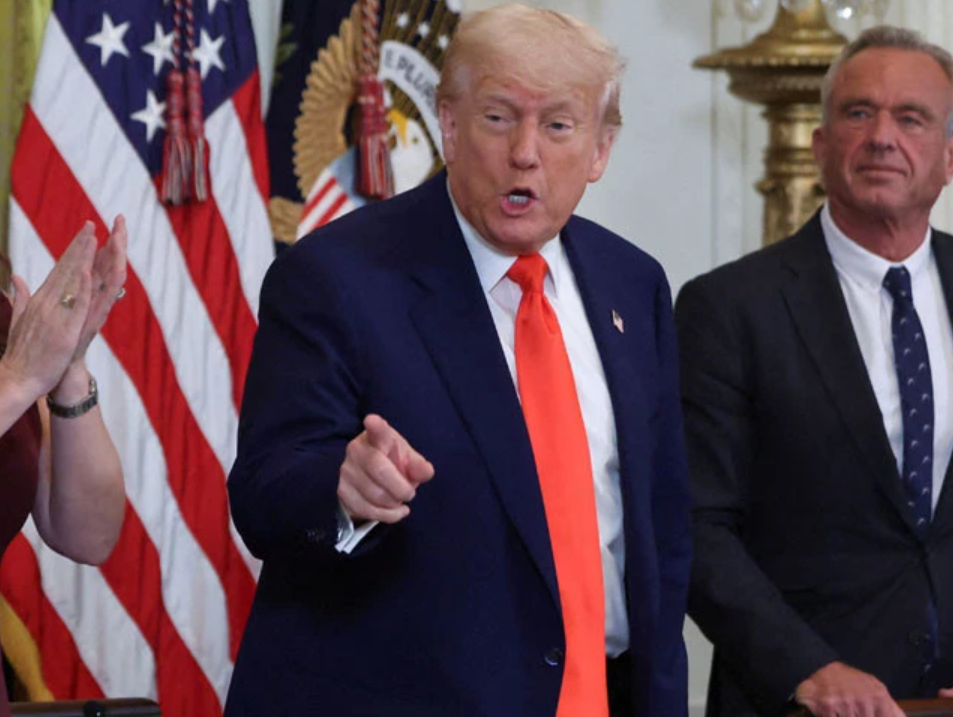
Speaking just hours before a rare meeting with Pakistan’s Chief of Army Staff, Field Marshal Asim Munir, at the White House, Trump declared, “I stopped a war… I love Pakistan. I think Modi is a fantastic man. I spoke to him last night. We’re working on a trade deal with India. But I stopped the war between Pakistan and India. This man was extremely influential in stopping it from the Pakistan side. Modi from the India side and others. They were going at it — and they’re both nuclear countries. I got it stopped.”
Trump’s remarks come in the wake of escalating tensions in early May, when Pakistan launched Operation Bunyanum Marsoos in response to deadly Indian military actions on May 6–7 that killed several civilians, including women and children. On May 10, Pakistan responded by deploying its Al-Fatah missile system to strike Indian military installations. The hostilities came to an abrupt halt following what Trump claims was his intervention.
The meeting between Trump and COAS Asim Munir at the White House — a rare occurrence in itself — is being viewed with particular interest, especially as Trump has suggested he deserves a Nobel Peace Prize for preventing a potential nuclear confrontation.
However, India’s official stance contradicts Trump’s narrative. According to Indian Foreign Secretary Vikram Misri, the ceasefire was the result of direct communication between Indian and Pakistani militaries through established channels — not US mediation.
“Prime Minister Modi told President Trump clearly that at no point were India-US trade deals or mediation over Kashmir discussed,” Misri stated, referring to a phone call between the two leaders during the G7 summit in Canada, which Modi attended as a guest. Misri emphasized, “India has not accepted third-party mediation in the past and will never do so.”
Pakistan, on the other hand, has expressed appreciation for Washington’s role in facilitating de-escalation. Islamabad credited the US for helping avert further conflict.
Trump, who said he encouraged both nations to focus on trade rather than war, had earlier warned during the conflict, “If you don’t stop, no trade.” His comments have raised eyebrows in New Delhi, which has been a key strategic partner for Washington, particularly in its Indo-Pacific policy to counter China’s growing influence.
Misri also revealed that although Modi and Trump had planned an in-person meeting during the G7, it did not materialize as Trump left early due to tensions in the Middle East. Modi invited Trump to visit India later this year for the Quad Leaders’ Summit, which Trump accepted.
As Trump seeks a return to the presidency in the upcoming US elections, his self-proclaimed role in resolving the South Asian conflict appears to be part of a broader effort to project his diplomatic influence — though not without controversy.