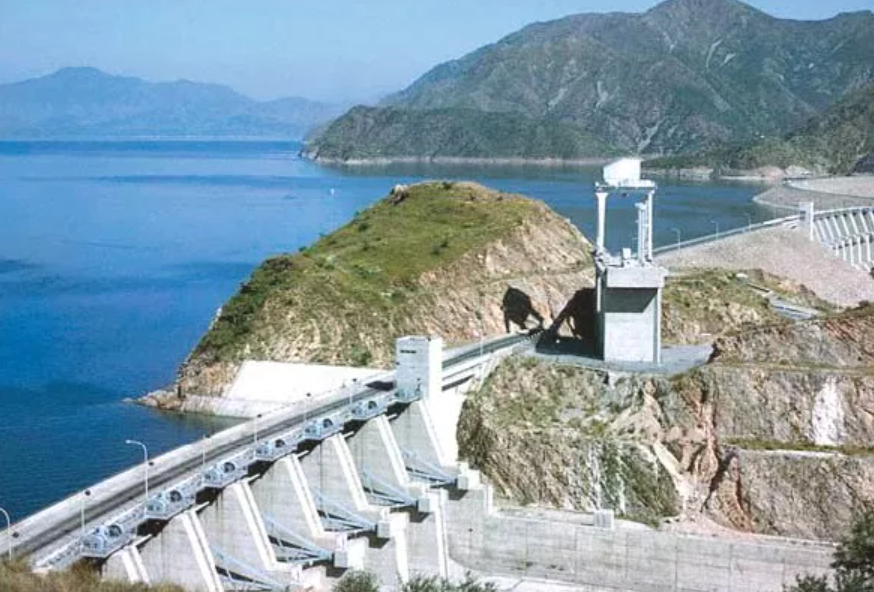
Inflow at Tarbela exceeds outflow as reservoir levels continue to rise across the country.
ISLAMABAD: The Water and Power Development Authority (WAPDA) reported on Sunday that the total usable water storage in Pakistan’s major reservoirs has exceeded 3.021 million acre-feet (MAF), marking a significant milestone in the country’s water management.
According to a WAPDA spokesperson, the combined water reserves in Tarbela, Mangla, and Chashma dams—along with other smaller reservoirs—have collectively reached this level due to rising inflows from various rivers.
At Tarbela Dam, the inflow from the Indus River was recorded at 131,100 cusecs, while the outflow stood at 82,000 cusecs. The current reservoir level is 1,459.21 feet, storing approximately 1.386 million acre-feet of water.
Mangla Dam reported a water level of 1,142.30 feet, holding about 1.418 million acre-feet, while the Chashma reservoir stood at 647.10 feet with 217,000 acre-feet of water.
The WAPDA representative noted that the inflow and outflow data for the Indus River at Tarbela and Chashma, the Kabul River at Nowshera, and the Jhelum River at Mangla are based on 24-hour averages. For all other monitoring points, figures were recorded at 6 a.m. on Sunday.
Further details provided include:
- The Jhelum River at Mangla had an inflow of 52,400 cusecs and an outflow of 32,000 cusecs.
- At Chashma Barrage, the inflow reached 143,800 cusecs with an outflow of 114,000 cusecs.
- The Chenab River at Head Marala had an inflow of 33,100 cusecs and an outflow of 13,700 cusecs.
- The Kabul River at Nowshera recorded both inflow and outflow at 44,700 cusecs.
These healthy inflow rates suggest positive trends for irrigation, power generation, and future water security amid seasonal demand.