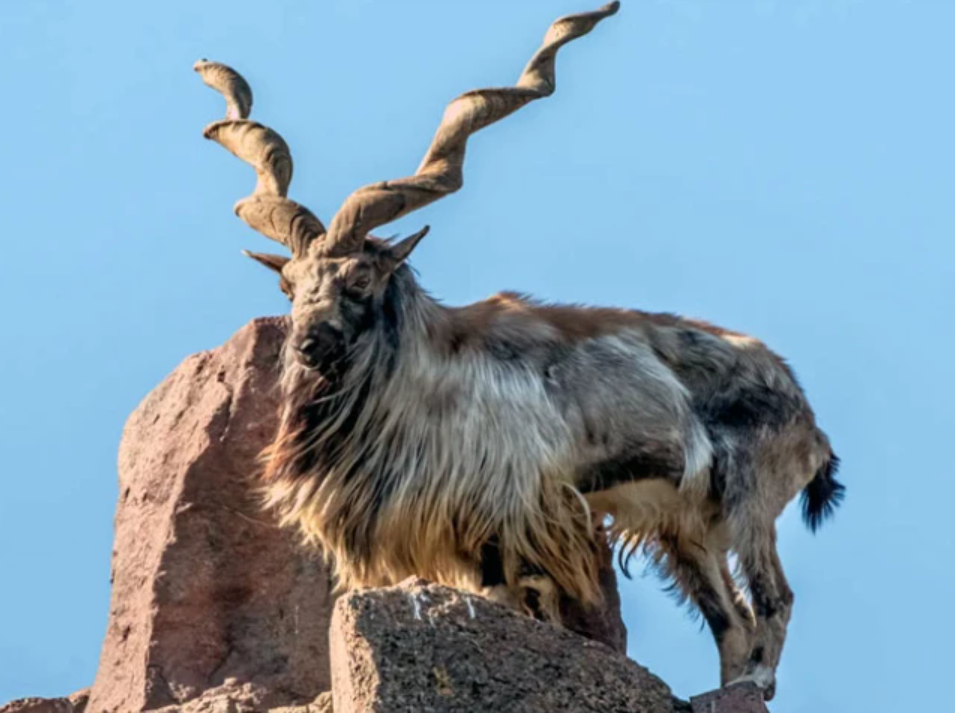

May 24, 2025 — Today, conservationists and wildlife enthusiasts across the globe are celebrating the International Day of the Markhor, a tribute to one of Central and South Asia’s most iconic and ecologically vital species.
The markhor (Capra falconeri), instantly recognizable for its striking, corkscrew-shaped horns, is more than just a breathtaking sight in the mountains of Afghanistan, India, Pakistan, Tajikistan, Turkmenistan, and Uzbekistan. It’s also Pakistan’s national animal, a symbol of natural heritage and resilience.
🌍 A Global Call for Conservation
First designated by the UN General Assembly in 2024, this day underscores the importance of regional cooperation and conservation. It’s a rallying cry for governments, conservation groups, and local communities to work together in protecting the markhor’s fragile mountain habitats.
⚠️ Facing Threats
Despite its significance, the markhor remains under severe threat from habitat loss, poaching, and the impacts of climate change. All known subspecies—the flare-horned, straight-horned, and Bukharan markhor—are either endangered or critically endangered. Listed as “near threatened” on the IUCN Red List since 2014 and included in Appendix I of CITES since 1992, the markhor’s status is a stark reminder of the challenges it faces.
With an estimated 5,700 mature individuals remaining in the wild, conservationists stress that urgent action is needed. Protecting this majestic mountain goat isn’t just about biodiversity—it’s also about boosting local economies and promoting sustainable tourism that benefits mountain communities.
🌿 Why It Matters
As we mark the International Day of the Markhor, the message is clear: safeguarding this iconic species is a shared responsibility. By taking action now, we can ensure that the markhor continues to roam the high mountains—an enduring symbol of nature’s wonder and resilience.