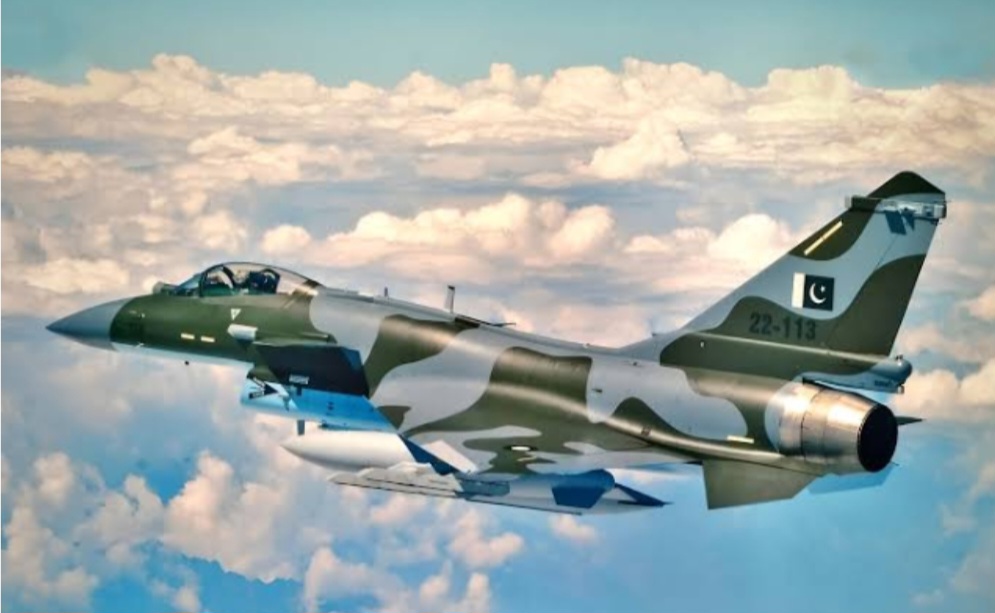

Indonesia’s evolving defense procurement strategy is at a crossroads as it weighs competing offers for advanced fighter aircraft from global powers — namely, China’s J-10, the U.S.’s F-15EX, and potential follow-up deals for France’s Rafale jets.In remarks on Wednesday, Deputy Defence Minister Donny Ermawan Taufanto, a retired Air Marshal, confirmed that Indonesia is actively evaluating China’s offer of J-10 fighters, along with a broader package including ships, arms, and frigates. The appeal of the Chinese deal, he noted, lies in its cost-effectiveness and modern capabilities, although the country is still reviewing compatibility, pricing, and after-sales support.Chinese J-10: Strategic and Cost-Conscious AppealThe J-10, widely deployed by China and exported to Pakistan, is being assessed as a cheaper, high-value option for Jakarta’s modernization needs. While the offer has been under review for over a year, recent regional developments — including reports that Pakistani J-10s shot down multiple Indian aircraft — appear to be influencing Indonesia’s risk and performance evaluations.U.S. F-15EX: Capable but ExpensiveAt the same time, Indonesia is revisiting its 2023 deal with Boeing to procure 24 F-15EX fighters at a projected cost of $8 billion. While Taufanto acknowledged the superior reputation of the U.S.-made jets, he flagged pricing concerns as a major hurdle, suggesting the financial burden may outweigh the platform’s technical advantages.French Rafale: Ongoing InterestThis comes in the wake of Indonesia’s $8.1 billion agreement in 2022 to purchase 42 Rafale jets from France — six of which are set for delivery next year. The recent visit of French President Emmanuel Macron to Jakarta and a preliminary defense agreement has revived discussion about potential additional Rafale orders.Strategic Considerations and Budget ConstraintsTaufanto emphasized that Indonesia is not only considering technical performance but also budgetary constraints and geopolitical balance in its decision-making. The government is taking a pragmatic approach — comparing multiple offers while trying to avoid overcommitment, especially given the need to modernize its broader military hardware across land, air, and sea.Final ThoughtsThis multi-vector procurement review signals a more strategic and diversified defense posture by Jakarta. With rising geopolitical competition in the Asia-Pacific, Indonesia appears to be carefully balancing affordability, interoperability, and diplomatic alignment in its quest for military modernization.Whether Jakarta opts for the cost-efficient Chinese J-10, the battle-proven but expensive F-15EX, or expands its fleet of French Rafales, its eventual choice will reflect a nuanced mix of fiscal prudence and regional strategy.