
Rs60bn allocated for defence; largest share spent on power subsidies
The federal government has requested retrospective approval from the National Assembly for nearly Rs345 billion in supplementary expenditures incurred during the current fiscal year—spending that bypassed prior parliamentary approval. No funds tied to war-related expenses with India were included.
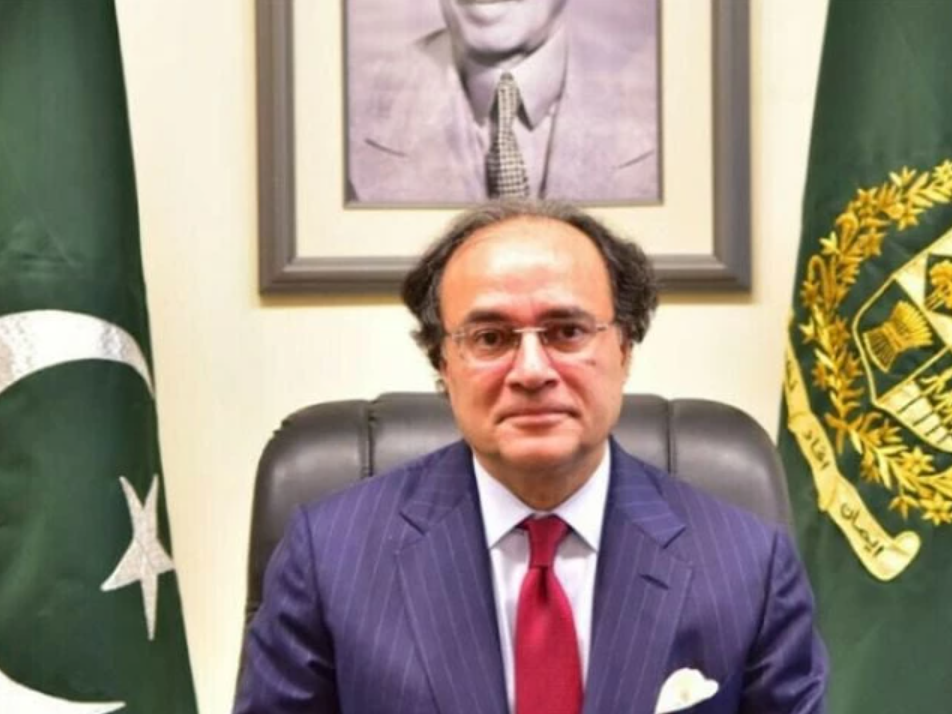
Of the total, Rs60 billion was granted to the defence sector, although none of it was linked to wartime operations. Finance Minister Muhammad Aurangzeb clarified that any conflict-related costs with India were covered under regular defence allocations.
This request for ex-post facto approval coincides with the presentation of the new fiscal budget. While the Rs344.6 billion figure appears significant—particularly given the government’s stated focus on fiscal discipline—it remains lower than last year’s supplementary spending.
Under constitutional provisions, the government may authorize unplanned expenditures without parliamentary consent in emergencies, but must later seek legislative approval. Over time, however, such provisions have become commonplace rather than exceptional.
The Rs345 billion in extra spending was largely financed by reallocating funds from other budgetary heads, meaning the overall budget ceiling remained unchanged. However, the scale of reallocation—mostly sanctioned by the Economic Coordination Committee—highlights flaws in budget forecasting and financial control.
As part of its $7 billion loan agreement with the International Monetary Fund (IMF), Pakistan had committed to limiting supplementary grants to cases of extreme natural disasters and pledged to obtain prior parliamentary approval for any spending over budgeted limits. Sources indicate that IMF officials have urged Islamabad to curb the frequent use of intra-budget reallocations to strengthen fiscal discipline.
The additional expenditures span a broad range: power subsidies, the Special Investment Facilitation Council (SIFC), military upgrades, discretionary projects for lawmakers, and preparations for hosting the Shanghai Cooperation Organisation (SCO) summit.
The largest slice—37%—went to energy subsidies, with Rs115 billion disbursed to independent power producers (IPPs), and another Rs308 million allocated for power sector reforms. Rs14 billion was also released to cover liabilities related to solarising agricultural tube wells.
Among other notable allocations:
- Rs59.5 billion in defence-related supplementary funds, including:
- Rs23.3 billion for Pakistan Army’s counter-terrorism capabilities,
- Rs8 billion for defence projects,
- Rs7 billion for the Jinnah Naval Base in Omara,
- Rs8 billion and Rs4 billion for the Special Security Divisions (South and North),
- Rs5 billion for internal security allowances,
- Rs2 billion for Inter-Services Public Relations (ISPR) technology upgrades,
- Rs1.3 billion for border fencing maintenance,
- Rs800 million for developing the naval air station in Turbat, and
- Rs1.8 billion for VVIP aircraft engine overhauls.
- Rs3.7 billion was allocated to the Reko Diq mining project.
- Rs1 billion was spent on hosting the SCO summit.
Despite reservations, the government allocated:
- Rs2 billion to restructure Pakistan Revenue Automation Limited (PRAL),
- Rs2 billion for Federal Board of Revenue (FBR) officers,
- Rs1.6 billion to establish anti-smuggling posts,
- Rs430 million for FBR officers’ transitional housing, and
- Rs869 million to boost FBR operational efficiency.
This comes despite the FBR recording a historic shortfall of Rs1.03 trillion in tax revenue with a month still left in the fiscal year.
Other notable grants included:
- Rs1.3 billion for the Election Commission of Pakistan to conduct local government elections,
- Rs7.2 billion for Sindh-based schemes, including the Green Line Bus Rapid Transit,
- Rs4.3 billion for the Interior Ministry for projects like building forensic infrastructure, tribal area women’s facilities, check posts, and water supply systems,
- Rs30 billion in flood relief for Sindh,
- Rs19.2 billion for small development projects under the now-defunct Pakistan Public Works Department,
- Rs9 billion in unspecified Sindh projects,
- Rs7 billion for lawmakers’ discretionary development schemes, and
- Rs23.4 billion for the federal Directorate of Immunisation.