BALAKOT:
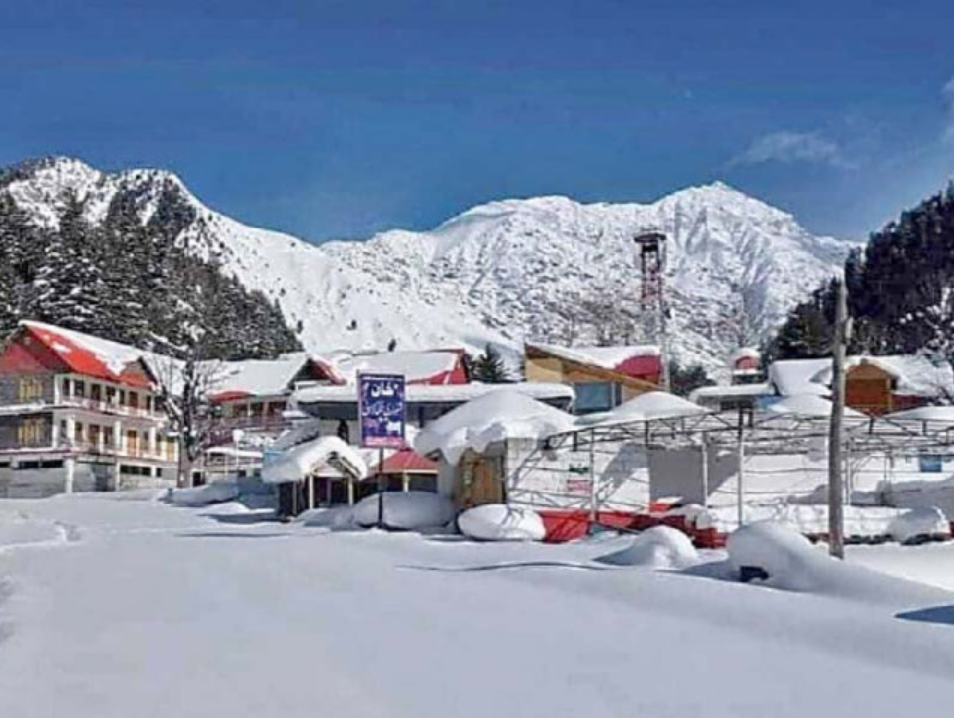
Kaghan Valley is currently experiencing unexpected weather patterns, likely driven by climate change. While snow had melted in the high-altitude areas by April—a shift from last year’s patterns—the valley has now been hit by snowfall at the end of May, creating a scene reminiscent of January.
Over three inches of snow has fallen in Babusar Top and nearby areas, resulting in plummeting temperatures. Lower elevations have seen heavy rainfall, which has significantly boosted water levels in rivers and streams. This weather trend is expected to persist for the next three days.
Yesterday, intense rainfall in Balakot and surrounding regions triggered snowfall in the upper reaches of the Kaghan Valley, bringing an early winter-like chill to the region. With temperatures now feeling more like mid-winter, intermittent snowfall continues at Babusar Top, and the snowmelt from April has given way to an unexpected cold wave.
Experts in the region have observed that the Kaghan Valley’s traditional four seasons—summer, winter, spring, and autumn—are being disrupted by shifting weather patterns, underscoring the impacts of climate change. Without timely action, the Kaghan Valley and even Pakistan’s distinct seasonal cycle could face significant challenges.
Local specialists attribute these changes to a combination of factors, notably unregulated construction and forest fires. The fires in the valley’s forests raise temperatures, while the proliferation of cement structures due to unchecked development further disrupts the natural balance.
They warn that if these issues are not addressed urgently, Pakistan’s natural seasonal diversity could be at risk of being lost altogether.