
Ministry urges caution to avoid job losses and economic fallout
ISLAMABAD: The Ministry of Industries has warned the federal government that its ambitious trade liberalisation plan could seriously harm at least 15 major job-creating sectors, advocating for a phased implementation that initially excludes finished imported goods.
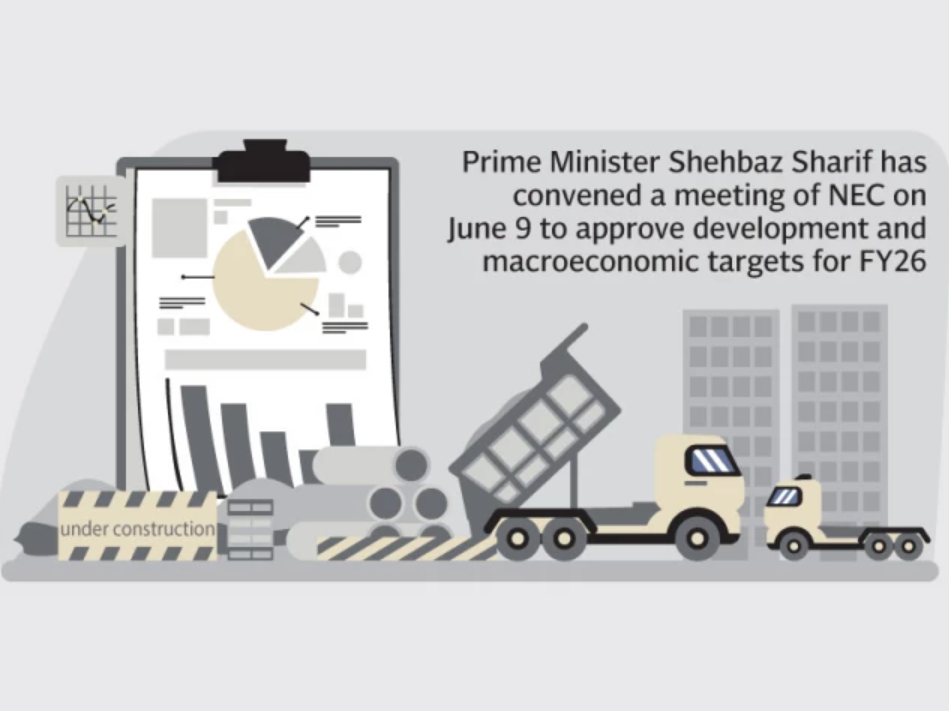
This caution comes as Prime Minister Shehbaz Sharif has called a meeting of the National Economic Council (NEC) for June 9 to approve development and macroeconomic targets for the next fiscal year—just a day before the federal budget announcement. The timing leaves the planning ministry with only hours to publish key documents following NEC decisions.
Sources reveal that during a recent meeting of the steering committee overseeing the new National Tariff Policy, several ministries voiced concerns about fully opening the economy to foreign competition in the upcoming fiscal year.
The meeting, chaired by Finance Minister Muhammad Aurangzeb, concluded without an official statement. The government is planning to slash import duties starting next fiscal year, as part of its broader trade liberalisation efforts. However, this has prompted worries from domestic industries, leading the prime minister to create a steering committee to review the potential consequences.
At Monday’s committee meeting, the Ministry of Industries recommended a gradual reduction in tariffs, starting with raw materials and intermediate goods. The finance minister, however, stated that such matters were beyond the committee’s remit and should be raised directly with the prime minister. Some members disagreed, arguing that it was within the committee’s mandate to assess potential impacts on vulnerable sectors.
Currently, Pakistan’s tariff system has five customs duty slabs, peaking at 20%. Under the new plan, these would be reduced to four tiers: 0%, 5%, 10%, and 15%.
The Ministry of Industries highlighted that industries fear the policy could force closures, with sectors such as chemicals, polyester, iron and steel, automobiles, and ceramics particularly at risk. These sectors are major job providers and essential to the domestic economy.
Concerns also center on the possibility of a sudden surge in imports that could trigger a balance of payments crisis. Pakistan’s foreign exchange reserves are already strained, and the rupee has fallen to nearly Rs284 against the US dollar. Compounding this, difficulties in opening letters of credit this month have emerged due to heavy debt repayments.
If external pressures mount further, the government may have to consider devaluing the rupee, aligning with IMF recommendations.
Initially, the Ministry of Commerce proposed a six-tier structure (0%, 3%, 6%, 9%, 12%, and 20%), but the prime minister did not agree. At the steering committee meeting, some argued for reducing tariffs only on raw materials and intermediate goods in the initial phase, warning that slashing tariffs on finished goods too early could be detrimental. Meanwhile, proponents of immediate liberalisation said delaying cuts on finished goods would make implementing them harder later on.
In the end, the committee agreed to initially cut tariffs only on raw materials and intermediate goods. A contentious issue remained whether the estimated Rs200 billion revenue loss from these cuts should be spread across all customs and regulatory duties or handled more selectively. While ministries called for a careful rollout, private sector representatives pushed for across-the-board reductions.
According to the government’s plan, additional customs duties will be eliminated over four years starting with the next budget, while regulatory duties will be phased out over five years. The Fifth Schedule of the Customs Act, covering imports of capital goods and industrial raw materials, is also set to be scrapped within five years.
A technical debate also emerged over the omission of Purified Terephthalic Acid (PTA)—a key raw material used in other industries—from the reduction plan, even though its derivative, Polyester Staple Fiber, was included.
Looking Ahead: A New Development Agenda
Meanwhile, the NEC meeting on June 9 will focus on approving the Annual Development Plan and setting macroeconomic targets for FY2025-26. The government aims to set the GDP growth target at 4.2%, a notable increase from the disputed 2.7% figure for the current year. The new plan projects cautious optimism, with agriculture expected to achieve modest gains, and a more robust recovery in large-scale manufacturing and construction supported by improved energy supply.
The Annual Plan 2025-26 is aligned with the “URAAN Pakistan” initiative, aiming to bolster foreign exchange earnings through higher exports, increased remittances, and stronger foreign direct investment. It follows the 5Es Framework for an export-led approach—emphasising diversification, competitiveness, import substitution, innovation, SME growth, and cluster-based industrial development to strengthen the “Made in Pakistan” brand.
Through these initiatives, Pakistan aims to build sustainable growth and resilience against external shocks.