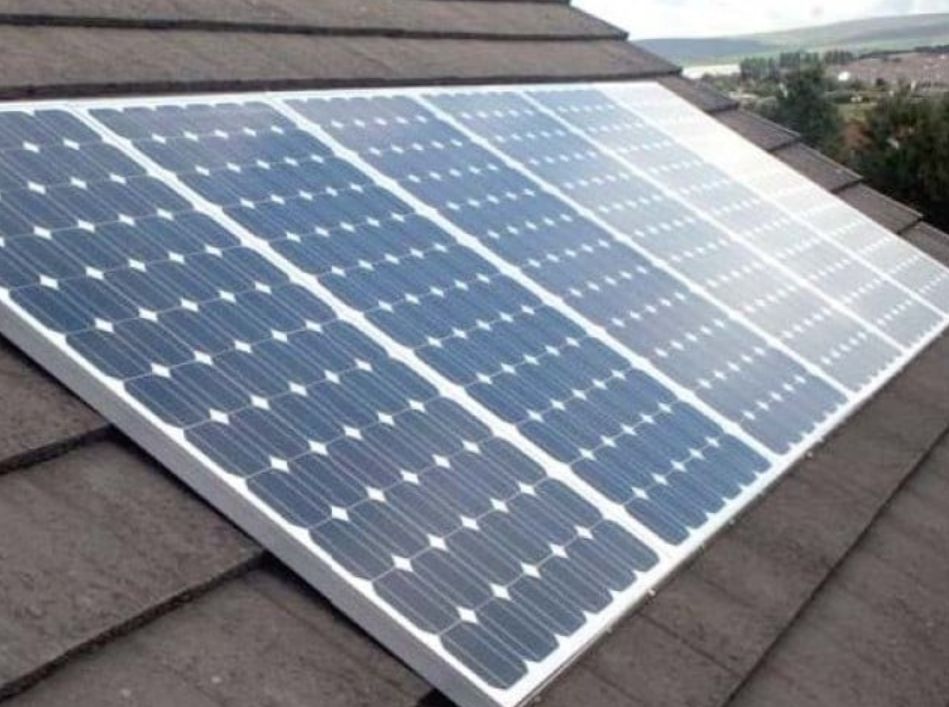

Pakistan is projected to inject 2,633 megawatts (MW) into the national grid through solar net metering in the fiscal year 2025-26, significantly advancing its renewable energy goals and contributing to Sustainable Development Goals (SDGs).
Despite already having surplus installed generation capacity, the country plans to add a total of 2,800 MW in FY26, with solar net metering accounting for the lion’s share. According to the Annual Plan 2025-26, this will raise the total installed generation capacity to 44,626 MW by June 2026.
The number of consumers using net metering is also expected to rise by 197,655. This increase will not only support Pakistan’s SDG commitments—particularly in boosting the share of renewables in energy consumption—but also enhance grid stability.
By the end of FY26, the country’s power generation mix is expected to reach approximately 50.5% from renewable sources—including hydropower, solar, solar net metering, wind, and bagasse—and 49.5% from thermal sources such as coal, natural gas, re-gasified liquefied natural gas (RLNG), oil, and nuclear power.
To support this energy transition, the power sector will receive Rs161.6 billion in public investment through the FY26 Public Sector Development Programme (PSDP). This funding will cover 63 projects, excluding those undertaken by independent power producers (IPPs). The focus will be on power generation, transmission, and distribution, with a strong emphasis on renewable energy and increasing electricity access.
Transmission infrastructure will also see significant upgrades. The grid will be enhanced with 5,550 MVA at 500 kV, 4,710 MVA at 220 kV, and 1,300 MVA through high-voltage direct current (HVDC) lines. Transmission line expansions include 170 km at 500 kV, 355 km at 220 kV, and 137 km at ±660 kV. New grid stations are also planned—one at 765 kV and two at 220 kV.
On the distribution side, investments will target the electrification of 15,352 villages and the addition of 1.861 million new consumer connections across both rural and urban areas. This will be supported by the extension of 1,244 km of 132 kV lines and a 2,490.7 MVA increase in grid capacity at the same voltage level.
These developments are aligned with the government’s broader strategy under the Uraan Pakistan initiative, which aims to strengthen energy security, enhance sustainability, and boost efficiency. Uraan’s framework is tied to Pakistan’s SDG obligations, Nationally Determined Contributions (NDCs), and climate resilience strategies.
The government is also implementing the National Electricity Plan (2023–27), which targets diversification, resilience, affordability, financial viability, and sustainability. The plan outlines 20 key priority areas to ensure clean, dependable, and cost-effective energy for all.
In parallel, green energy initiatives—such as those under the Alternative and Renewable Energy (ARE) Policy 2019—seek to raise the renewable energy share to 30% by 2030. Additional measures include deploying battery energy storage systems and 400 MVAR reactive power compensation devices (including Flexible AC Transmission Systems or FACTS) within the National Transmission and Despatch Company (NTDC) network to increase grid reliability and flexibility.
These efforts underscore the government’s commitment to transitioning toward a more sustainable and resilient energy future.