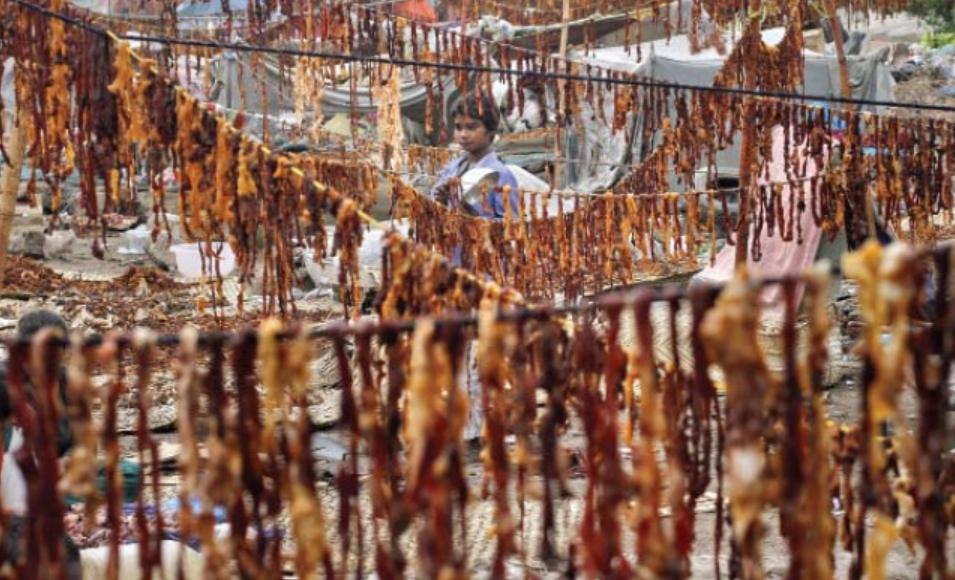

During the three days of Eidul Azha, Rawalpindi witnessed a surge in temporary meat markets, especially around areas like Jamia Masjid Road, Fawara Chowk, and Ganj Mandi Road. These makeshift stalls, primarily operated by families identified as professional beggars, offered sacrificial mutton and beef at prices significantly lower than the regular market rate. Mutton was sold for Rs1,000–Rs1,200 per kilogram and beef for around Rs600, compared to the usual Rs2,400 and Rs1,400 respectively.
The affordability drew in a substantial number of middle-class customers, along with bulk buyers such as small restaurant owners, dhaba operators, and kebab vendors. These pop-up meat markets became hotspots for brisk business throughout the Eid holiday.
In addition to regular cuts, vendors also cleaned and sold the heads and hooves of sacrificial animals. Transportation of goods was largely facilitated by motorcycle rickshaws.
With such an abundance of meat flooding the area, traditional butcher shops across the twin cities are expected to remain closed for the next two weeks. This unexpected shift reflects both the economic dynamics of Eid and the adaptability of informal vendors during the festive season.