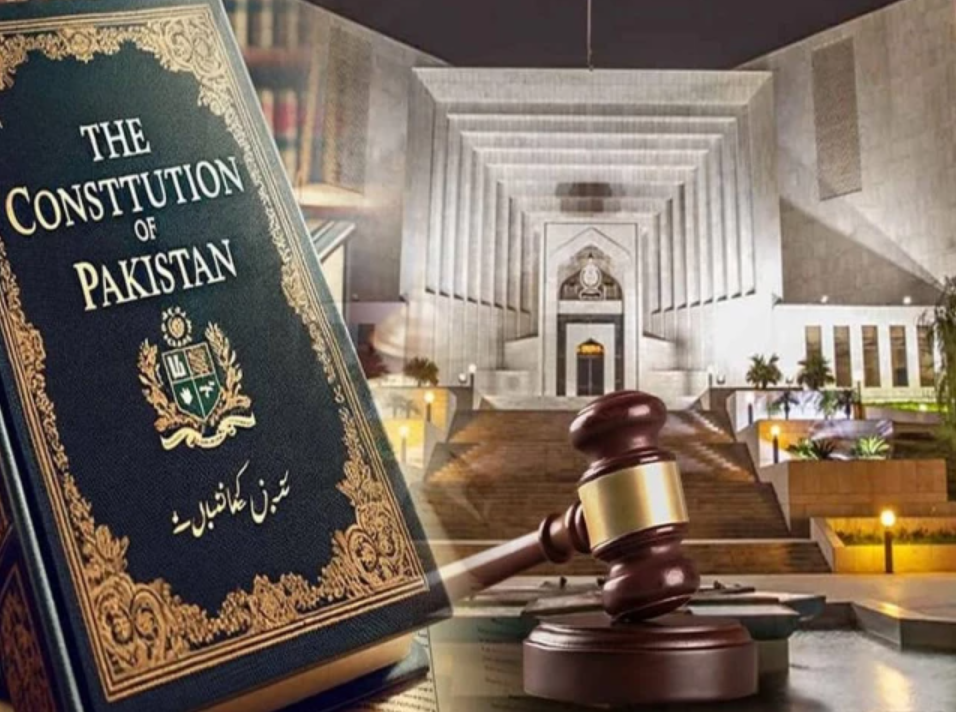

The Supreme Court’s constitutional bench (CB), led by Justice Aminuddin Khan, convened on Monday to address a series of significant petitions, reflecting the court’s active engagement with matters impacting governance, education, and public service.
One key matter before the bench was a petition challenging the exemption granted to armed forces officers from the written portion of the Central Superior Services (CSS) examination. Filed through advocate Ali Azeem Afridi, the plea argued that the exemption creates an unfair distinction, as civilian candidates are required to clear a rigorous written test alongside an interview to qualify for induction. When Justice Ali Baqar Najafi pressed the counsel on which fundamental rights were infringed, the argument of discrimination was put forward. The bench subsequently issued notice to the federation under Section 3 of the Civil Services Rules, 1956, and adjourned the case for three weeks. This move sets the stage for further scrutiny of recruitment practices within Pakistan’s elite civil bureaucracy.
In parallel, the bench continued hearings on a petition advocating the inclusion of life skills education in schools. The justices summoned federal and provincial education secretaries, signaling the court’s intent to ensure a unified approach. Justice Muhammad Ali Mazhar underlined the need for coordinated policy-making between federal and provincial authorities. Although the additional attorney general noted that such education is already present in Islamabad’s curriculum, the court emphasized nationwide implementation. The absence of a Khyber Pakhtunkhwa representative and delays in sharing provincial responses drew the court’s ire, with directions issued to promptly provide documents to the petitioner’s counsel.
The bench also reviewed an appeal regarding the appointment of key positions at Islamabad’s International Islamic University. Questions were raised about the status of the rector and president appointments, with the court learning that the rector position remains under acting charge, while the newly appointed president has yet to assume duties due to being abroad.
Overall, Monday’s proceedings reflected the court’s proactive stance on structural reforms in public service recruitment, educational policy, and higher education governance. The coming weeks are likely to see further developments as the federation and provinces respond to the court’s directives.