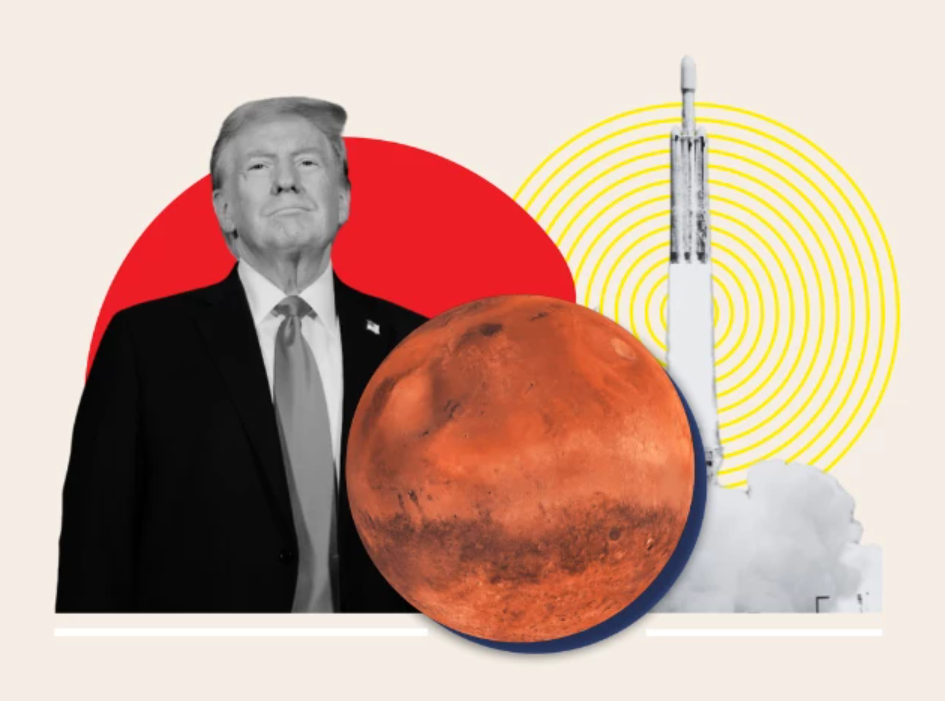

In a bold move signaling a significant shift in U.S. space policy, President Donald Trump’s proposed 2026 budget earmarks $1 billion for private sector-led Mars exploration. The plan, introduced under the Commercial Mars Payload Services Program (CMPS), represents a strategic pivot from traditional NASA-led missions toward a more privatized approach involving major industry players such as SpaceX.
The CMPS initiative aims to fund the development of vital mission components—including next-generation spacesuits, communications infrastructure, and a human-rated Mars lander—through contracts awarded to commercial firms. This aligns closely with Elon Musk’s long-standing Mars ambitions and positions SpaceX and similar companies as central to the next phase of interplanetary exploration.
However, the proposal comes with trade-offs. Trump’s budget outlines substantial cuts to NASA’s broader science programs, raising concerns about the agency’s ability to maintain its leadership in Earth and planetary science. Critics, including some lawmakers and former NASA officials, warn that these reductions could undercut the agency’s long-term scientific objectives in favor of short-term cost efficiency.
Proponents of the plan argue that leveraging private innovation can lower costs, accelerate timelines, and spread risk, all while maintaining U.S. dominance in space exploration. The administration maintains that this public-private partnership model reflects responsible use of taxpayer funds and a pragmatic path toward human exploration of Mars.
Ultimately, this budget proposal could redefine how the U.S. approaches space exploration—shifting NASA’s role from sole operator to strategic collaborator. Whether it boosts innovation or compromises scientific rigor remains to be seen, but one thing is clear: Mars may no longer be the sole domain of government agencies.